Fire lanes are not something a striper or a property owner gets to decide alone. The International Fire Code sets the frame, and the local fire code official decides what gets marked and how. In Mississippi, which code applies depends on the building and the town. This guide covers what the code says about fire apparatus access roads, how marking rules vary, and who to call before you paint a curb red.
Who sets fire lane rules in Mississippi
The Mississippi State Fire Marshal's office says that as of July 1, 2024 it adopted the 2024 International Fire Code and International Building Code. Under Mississippi Code Section 45-11-101, the state fire prevention code covers buildings owned by the state or state agencies, buildings used for public assembly, and buildings 75 feet or taller. For public assembly buildings, the state code steps aside where a county or city has a code at least as strict. The State Fire Marshal reviews local codes each year and publishes a list of those that qualify.
For a shopping center, church, school, apartment complex or warehouse, that means the person who rules on your fire lane is often the local fire marshal or fire code official. Call the city fire department or building office first. Outside city limits, ask the county. If you are not sure who has authority, the State Fire Marshal's office is a good place to start.
What counts as a fire apparatus access road
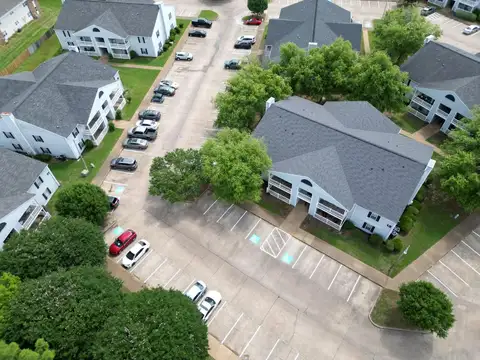
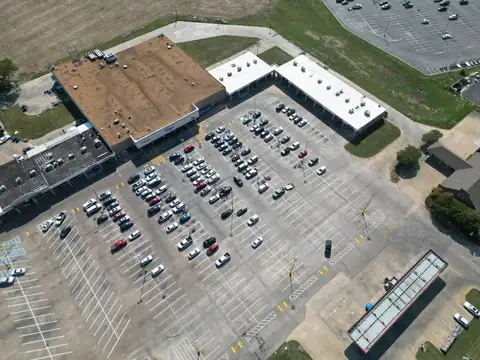
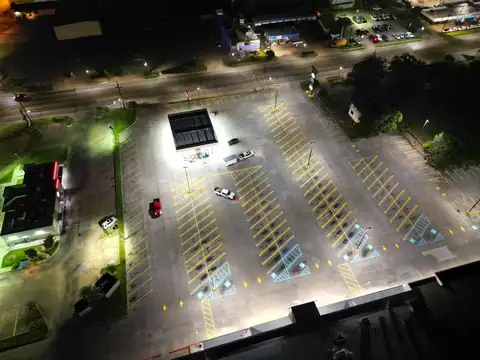
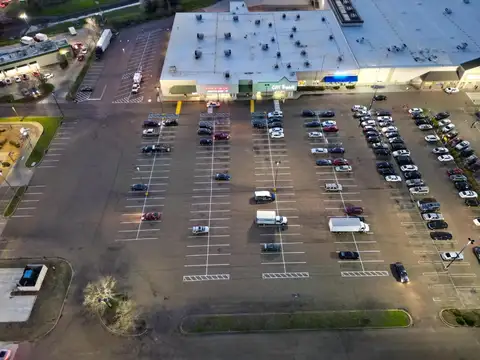
The fire code calls a fire lane a fire apparatus access road: a road that gives fire trucks access from a fire station to a building or part of a building. The IFC generally wants these roads to reach within 150 feet of all portions of a building, with exceptions, and many jurisdictions amend that distance. In a parking lot, the fire lane is often the drive along the front or sides of the building, which is also where customers want to stop and wait.
Width, clearance and keeping it open
Section 503.2.1 of the IFC calls for an unobstructed width of at least 20 feet and an unobstructed vertical clearance of at least 13 feet 6 inches. Appendix D adds more detail, such as a 26 foot minimum width where a fire hydrant sits on the access road and a surface able to carry fire apparatus up to 75,000 pounds in the 2021 text. Appendix D is not mandatory unless the local adopting ordinance says so.
Section 503.4 says access roads shall not be obstructed in any manner, including the parking of vehicles, and the minimum widths and clearances must be kept at all times. Dumpsters, planters, cart corrals and delivery trucks parked in the lane all cause problems. Good striping helps, but it only works if management enforces it.
What the IFC says about marking
Section 503.3 says that where the fire code official requires it, approved signs or other approved notices or markings that include the words NO PARKING FIRE LANE shall be provided. The markings must be kept clean and legible and be repaired or replaced when needed. Notice the word approved. The base code leaves the details to the local official.
Appendix D, where adopted, calls for permanent NO PARKING FIRE LANE signs at least 12 inches wide by 18 inches high, with red letters on a white reflective background. Roads 20 to 26 feet wide are posted on both sides. Roads more than 26 feet and up to 32 feet wide are posted on one side. Local codes can and do change these numbers. Seattle, for example, amended the both-sides rule to start at 12 feet.
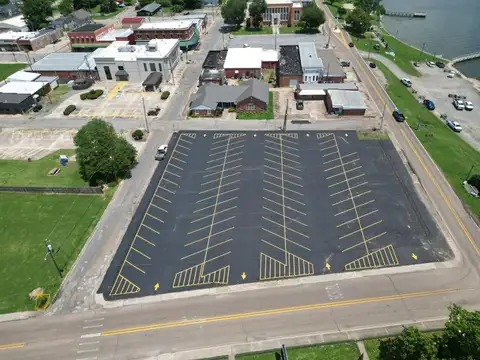
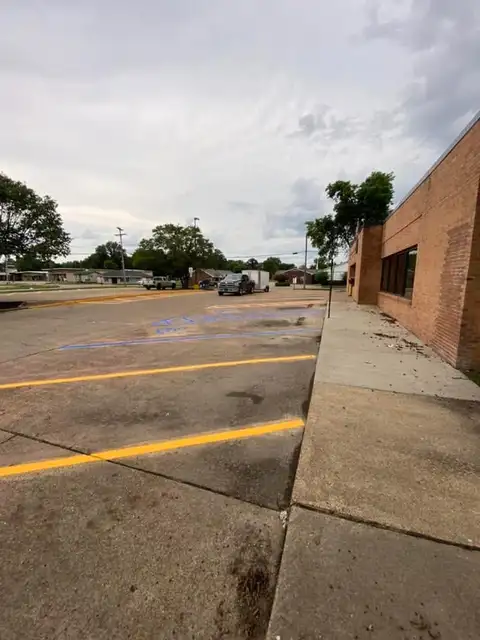
Paint specs vary from town to town
Because the IFC leaves the details to the local official, paint specs differ. Wichita Falls, Texas calls for a 6 inch red stripe with 4 inch white letters repeated every 40 feet. Great Falls, Montana uses a 6 inch red stripe with 4 inch white letters about every 25 feet, on the curb face and top of curb, or on the pavement where there is no curb.
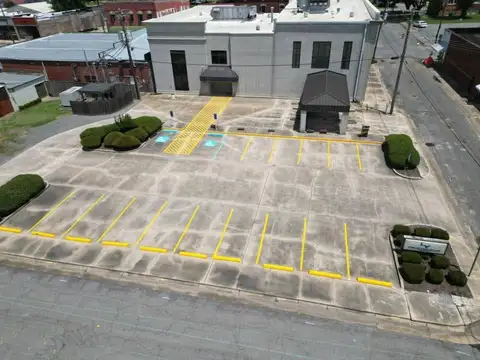
Closer to home, a fire lane checklist posted on the City of Tupelo's website cites the 2018 IFC and calls for red curbs, or a red stripe on the pavement where there is no curb, stenciled every 50 feet with white letters reading FIRE LANE NO PARKING TOW AWAY ZONE. Where striping is not practical, it calls for approved signs every 75 feet. Sign mounting heights and spacing vary too, so ask for your local standard in writing.
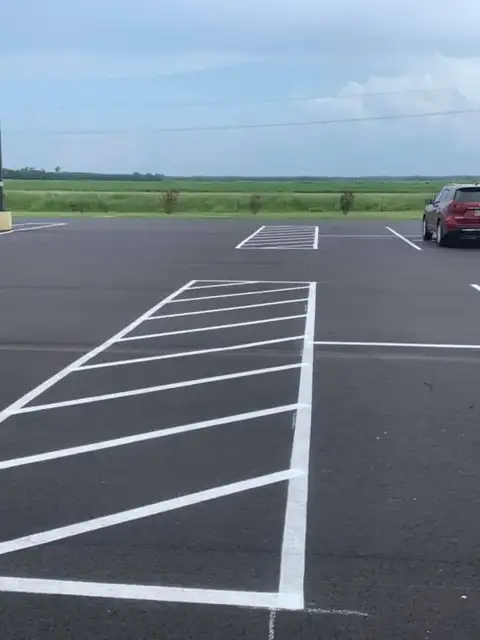
Keeping a fire lane in compliance
A fire lane is not a one-time job. The IFC requires markings to stay legible, and some local codes say it outright. In Wichita Falls, the owner must mark and maintain fire lanes by painting stripes on the surface. Faded red curbs, lettering worn off by tires, and lanes covered by sealcoat all need attention. If you sealcoat, plan to repaint the fire lane to the same approved standard when the sealer has cured.
How we handle fire lane work
Straight Line Services marks no-parking zones and fire lanes in Mississippi, Louisiana, Tennessee, Alabama and Arkansas. Before we paint, we ask for the approved site plan or the fire marshal's marking standard for your town, so the stripe, lettering and spacing match what the official expects. If you do not have one, we will tell you who to ask. Call or text 662-719-7737 for a free estimate.
Need this done? Straight Line Services gives free estimates from Ruleville. Call or text 662-719-7737.
Free estimate