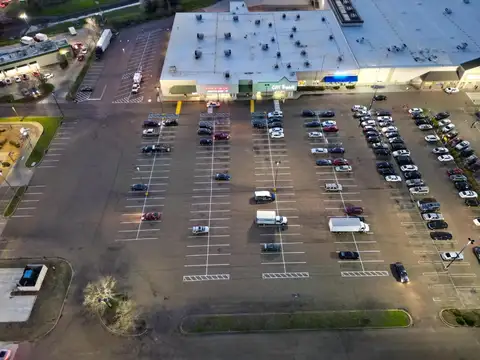
There is no single calendar answer. How long lines last depends on the material, the traffic, the surface and how often you sealcoat. What does have a firm answer is this: lines people cannot read are not doing their job, and some markings, like fire lanes and accessible stalls, carry code duties. Here is what the research says about line life and how to judge timing for your own lot.
What the research says about line life
A Federal Highway Administration guide on maintaining pedestrian facilities lists approximate service lives of about 9 to 36 months for paint, about 48 months for epoxy, about 72 months for thermoplastic and 48 to 96 months for preformed tape. A Montana study of road markings found conventional paint lasted about two years on roads carrying under 5,000 vehicles a day, about one year at 5,000 to 10,000, and less than a year above that.
Those numbers come from public roads, not parking lots. Lot traffic moves slower, but it turns and stops a lot. The FHWA guide notes that turning vehicles cause significantly more wear on markings. Use the research as a rough range, then look at your own lot. A busy grocery or pharmacy entrance may wear through long before the stall lines along the back fence of the same property.
What wears lines out faster
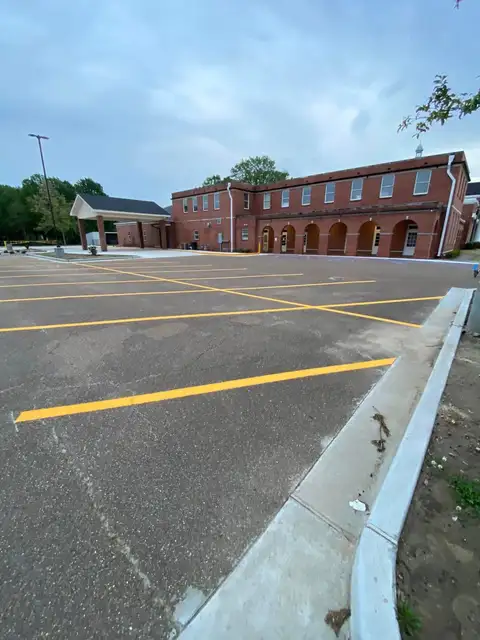
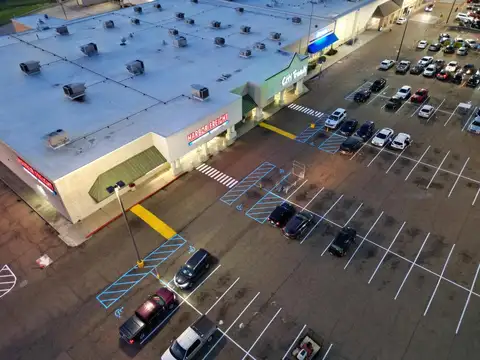
Traffic volume is the big one. In the FHWA guide, one community reported a clear link between traffic volume and when markings needed maintenance. On a lot, the entrance, the main drive lane, drive-through lanes and stop bars take the most tires, so they fade first. Stall lines in the back row of a church lot can look fine for years while the front entrance arrows are gone.
Surface condition and prep matter too. Paint specs call for a clean, dry surface free of dirt, oil and grease, and some call oil-soaked areas to be degreased first. Paint holds only as well as the surface under it. Lines on raveling or cracked asphalt break up with the pavement.
Sealcoating resets the clock
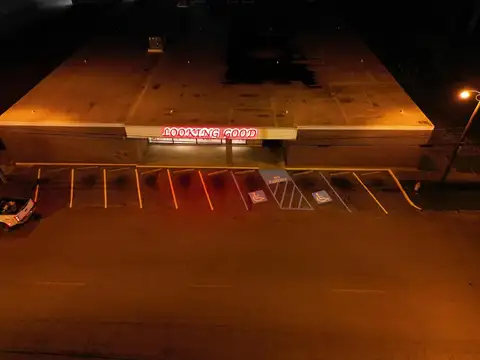
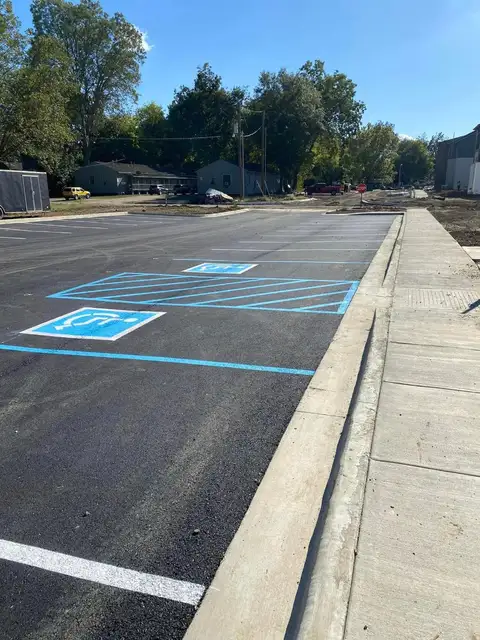
Sealer goes over the whole surface, lines included, so a sealcoated lot needs to be restriped every time. Some sealcoat specs even call for abrading existing markings before the sealer goes down. If you sealcoat every few years, your striping schedule is tied to that cycle more than to paint wear.
Under Access Board guidance, resealing counts as an alteration, and accessible spaces must be provided when a lot is resurfaced or reconfigured. So a restripe after sealcoat is the time to check your accessible stall count and van space against the ADA table, not just repaint old lines. If the lot has grown or changed since it was first striped, the old count may be short.
Fire lanes and ADA markings have their own clock
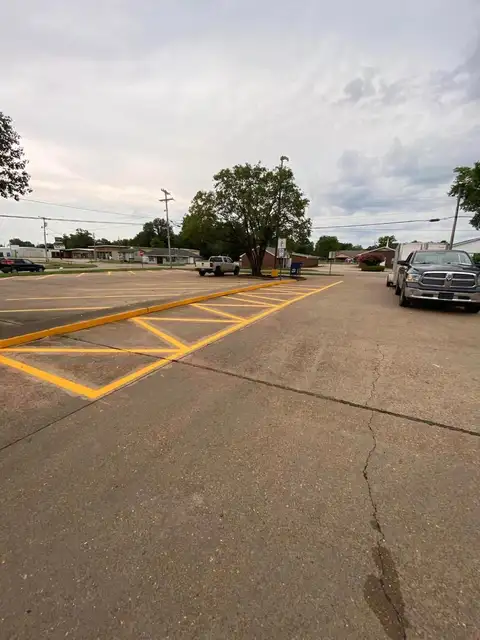
The International Fire Code says fire lane markings must be kept clean and legible and be repaired or replaced when needed. A faded red curb is not just a looks problem. Check it on its own schedule, separate from the stall lines. If your local fire code official has an approved marking standard on file for the property, keep a copy so the repaint matches what was approved.
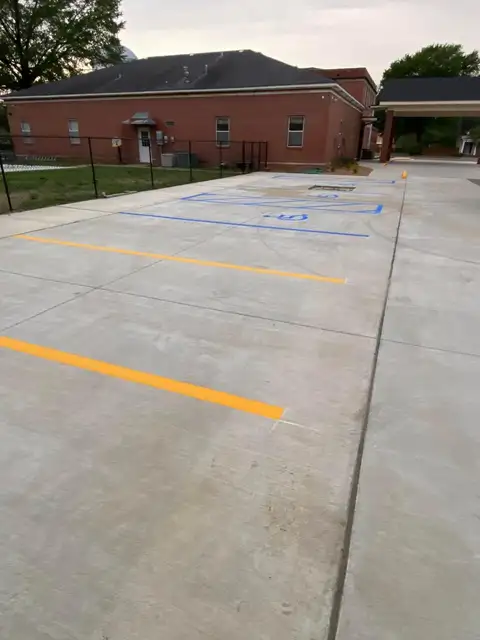
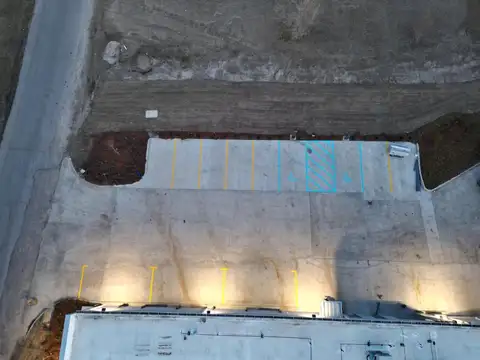
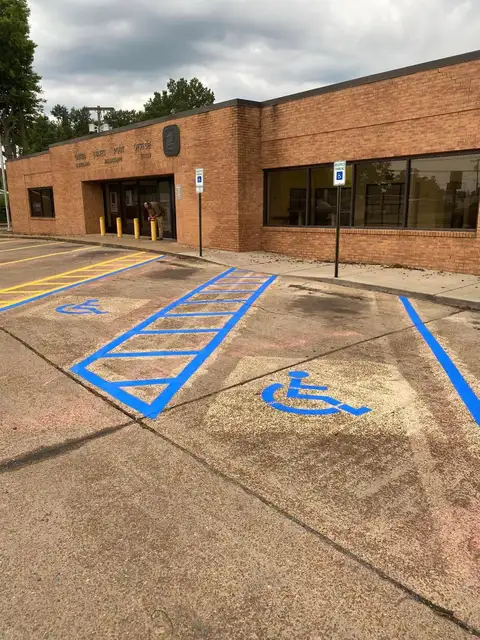
ADA access aisles must be marked so people do not park in them. A worn aisle stripe invites parking. Businesses that serve the public have a continuing duty to remove barriers when readily achievable, and the Justice Department says restriping is usually inexpensive and typically readily achievable. The Access Board treats refreshing existing striping in place as normal maintenance.
A simple walk-through check
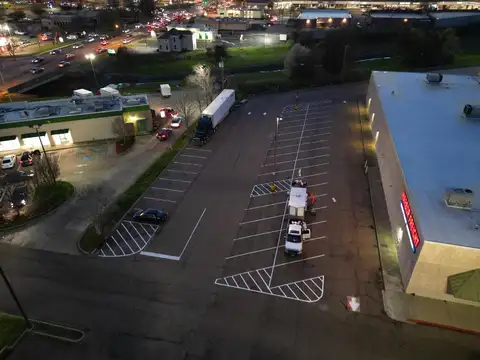
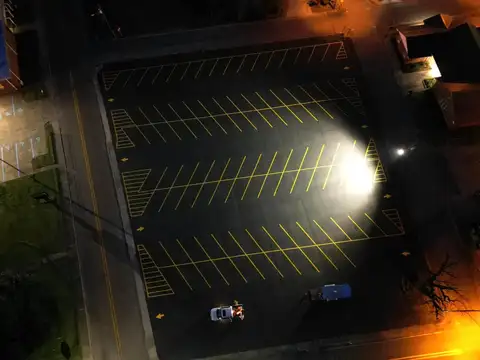
Walk the lot once in daylight and once after dark. Stand where a first-time visitor enters and ask whether you can tell where to drive, where to stop and where to park. Look closely at entrance arrows, stop bars, crosswalks, accessible aisles and symbols, and fire lane curbs and lettering. If you have to guess where a stall line is, so does everyone else. Take photos each time so you can compare from one year to the next.
When a new layout beats a touch-up
If you are changing the layout to add ADA stalls, fix traffic flow or fit more spaces, the old lines have to go. One county parking lot spec says not to remove old markings by painting over them with blank paint. It calls for shot blasting or water blasting instead. Another option is to time the new layout right after a sealcoat, when the surface is clean and black.
Pick a stretch of good weather
Paint needs a dry surface and the right temperature. One university spec sets 50 degrees F as the minimum for water-based paint and 95 degrees F as the maximum. A county spec says not to paint when temperatures are expected to drop below 50 degrees within 24 hours. One traffic paint data sheet we checked lists 40 degrees as its minimum. Follow the label on the paint being used.
Straight Line Services restripes lots of all sizes in Mississippi, Louisiana, Tennessee, Alabama and Arkansas. We work on new and sealed asphalt, and we can handle ADA stalls, fire lanes and no-parking zones on the same visit. Call or text 662-719-7737 and we will talk through what your lot needs before giving you a free estimate.
Need this done? Straight Line Services gives free estimates from Ruleville. Call or text 662-719-7737.
Free estimate