Where safety lines go
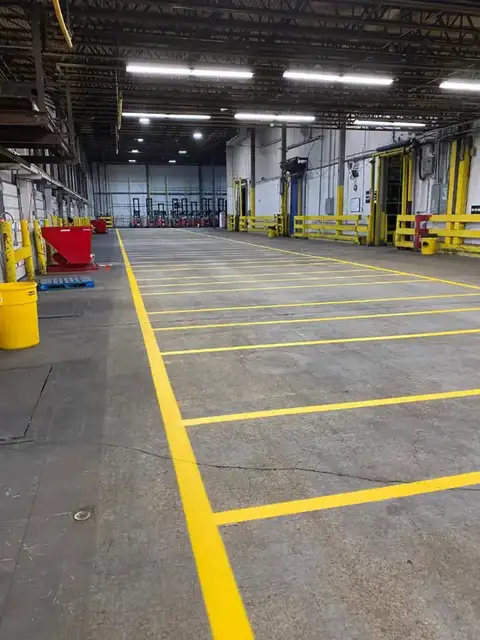
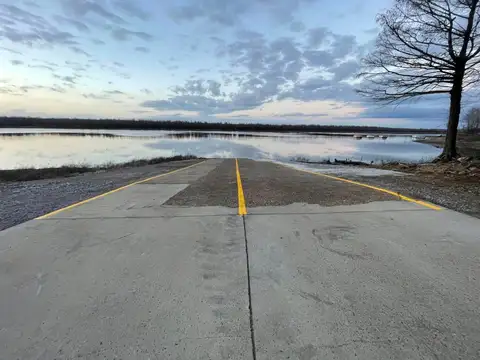
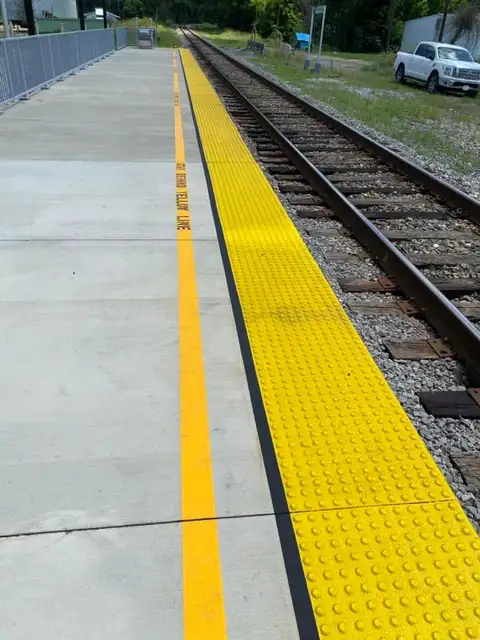
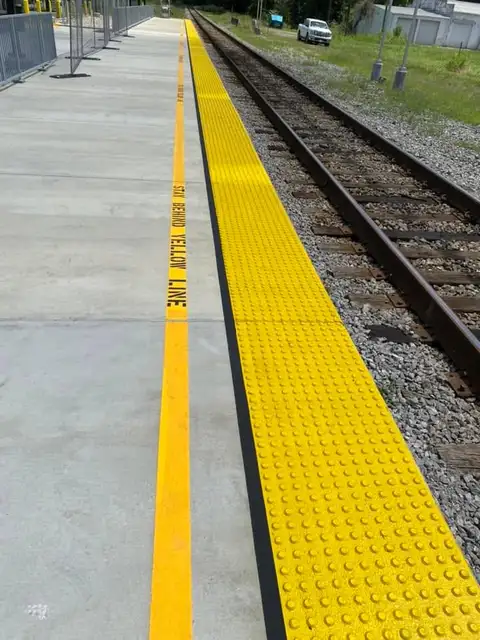
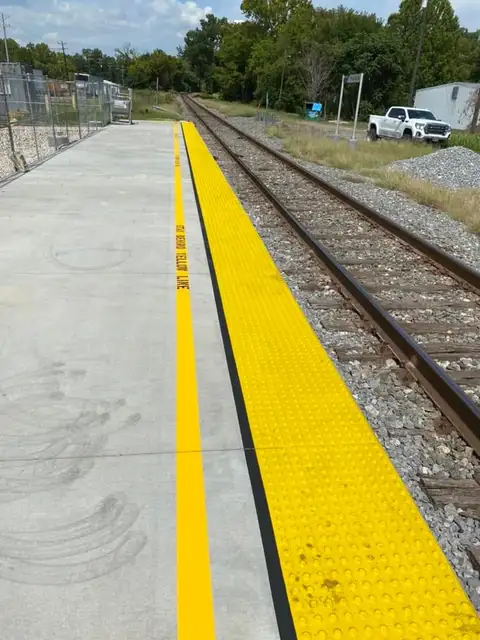
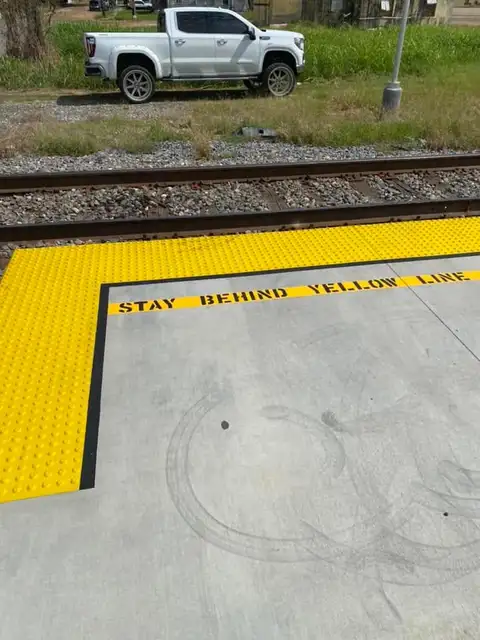
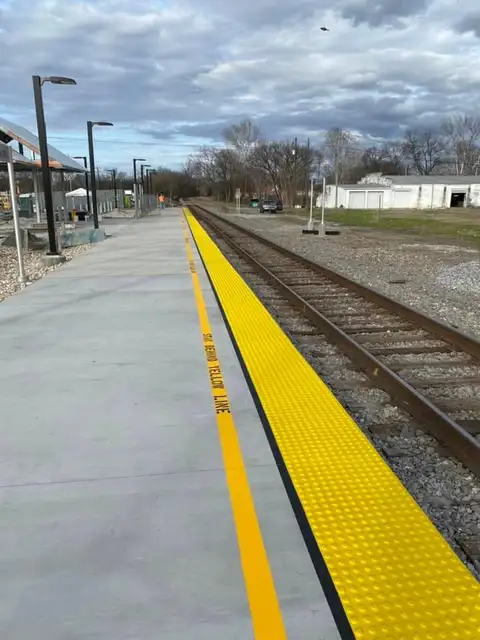
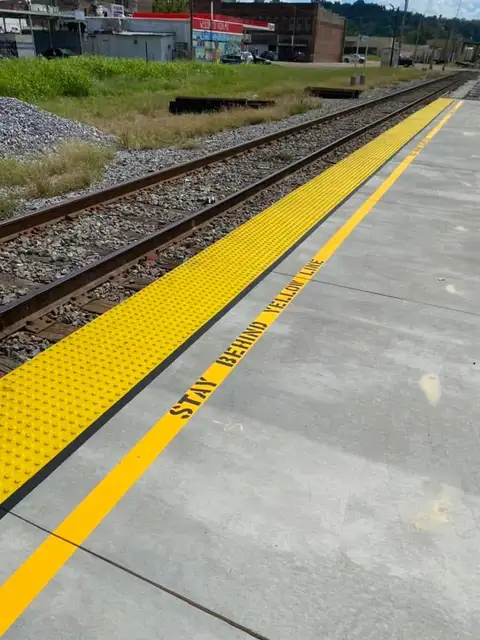
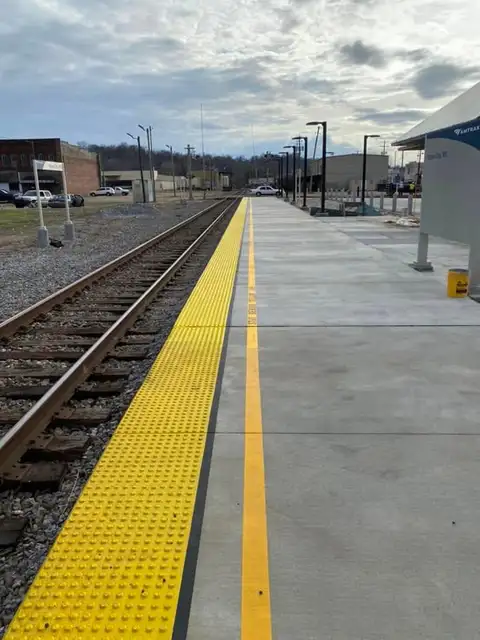
Platform edges are the classic spot: rail platforms, loading platforms and raised walkways where a step off the edge means a fall. Loading docks get a line along the dock edge so people stay back from the drop and from trucks backing in. Walkways along drive lanes get edge lines so people and vehicles each keep to their side.
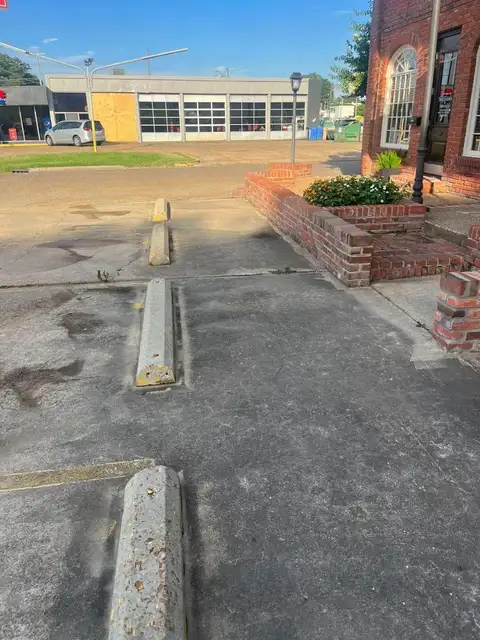
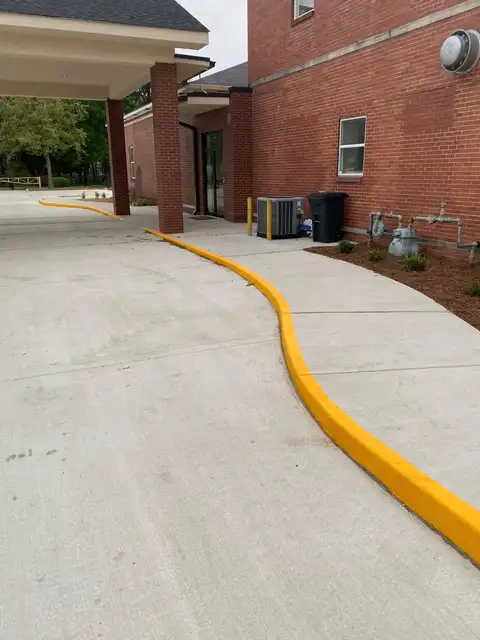
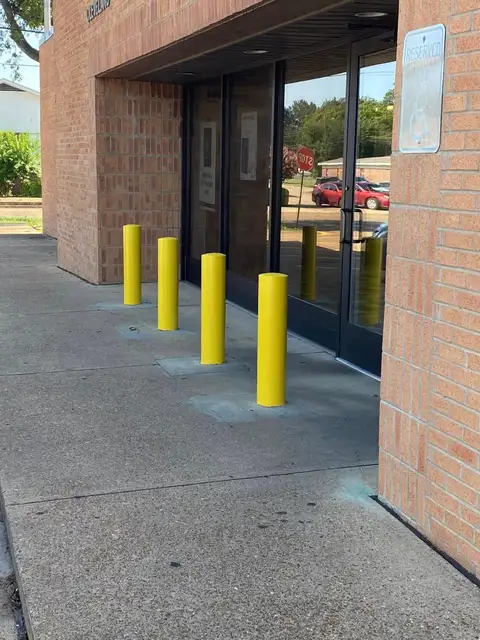
Smaller hazards matter too. A curb at the end of a sidewalk, a single step in a walkway, a change in floor level, a column in a parking garage or a bollard by a door are easy to miss at night or in a hurry. A yellow line on the edge tells people to look down. We walk the site with you and mark where the hazards are.
Why yellow
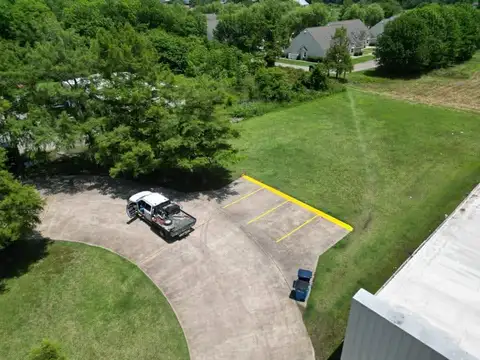
OSHA's safety color rule, 29 CFR 1910.144, says yellow shall be the basic color for designating caution and for marking physical hazards such as striking against, stumbling, falling, tripping and caught in between. Red is for fire protection equipment and danger. That is why yellow is the default for edges and trip hazards.
OSHA does not set an exact width or shade for every safety line, so the plan should be consistent across your site. A line along a platform edge should look the same at both ends and at every platform. If you already have a color plan, we follow it. If not, we can talk through a simple one so each color means one thing.
Platform edges and detectable warnings
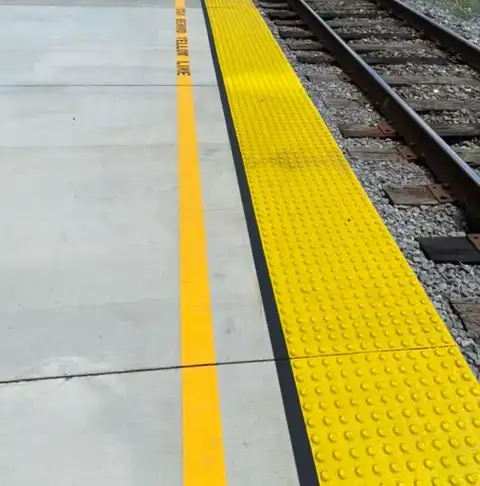
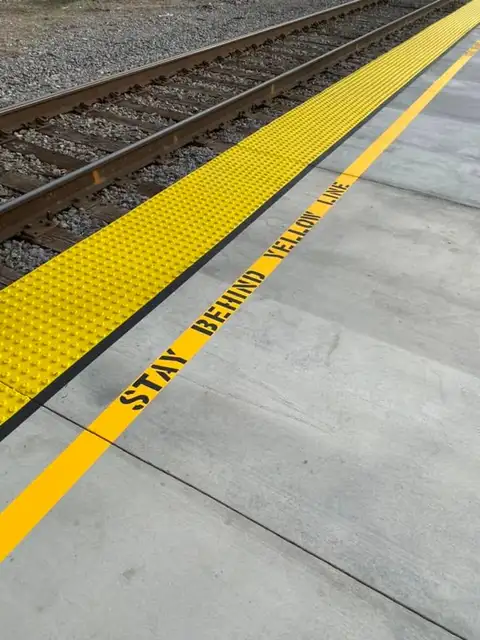
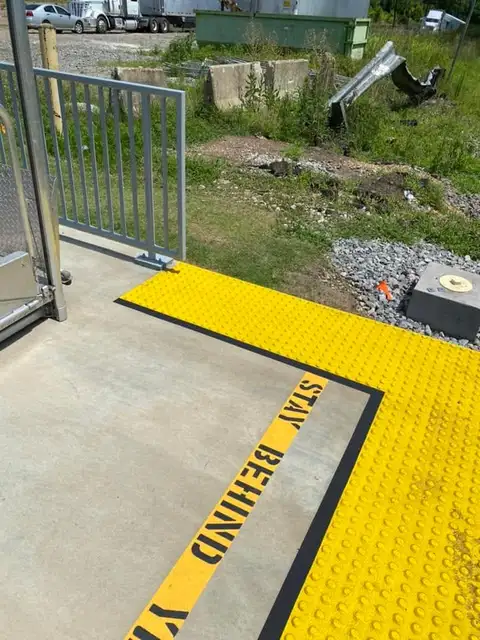
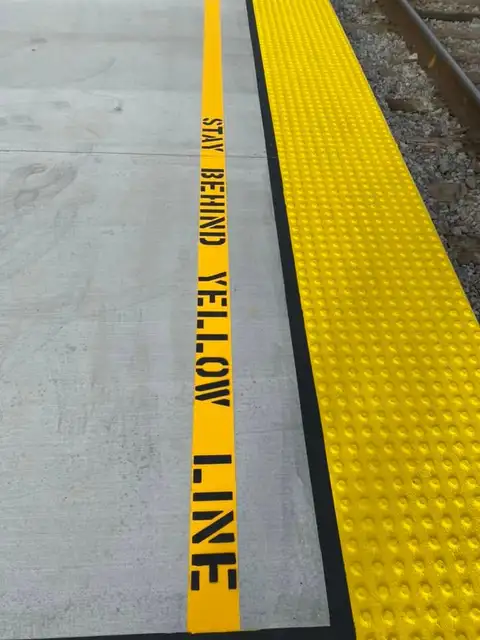
Transit and rail platforms often have two kinds of edge markings. One is a painted safety line. The other is a detectable warning surface, the strip of raised truncated domes people can feel underfoot or with a cane. The 2010 ADA Standards require detectable warnings along platform boarding edges that are not protected by screens or guards.
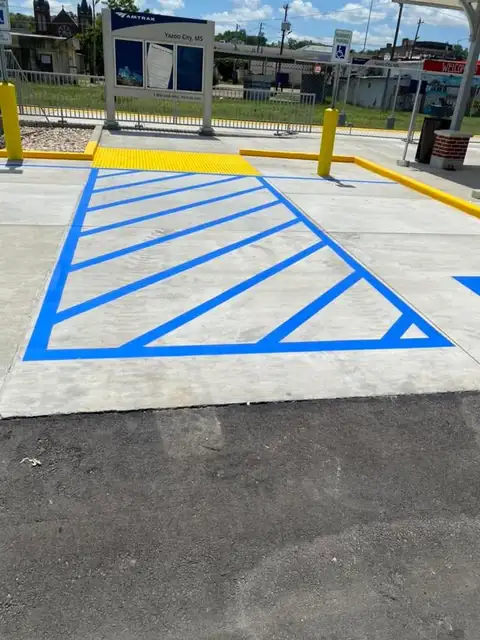
A detectable warning surface is its own product, installed to its own standard, and it must contrast visually with the surface next to it. Our painted yellow lines go along platforms and walkways to add a clear visual warning. If your platform needs detectable warnings, plan for them separately, and we will lay out the painted lines to work with them.
Making lines last
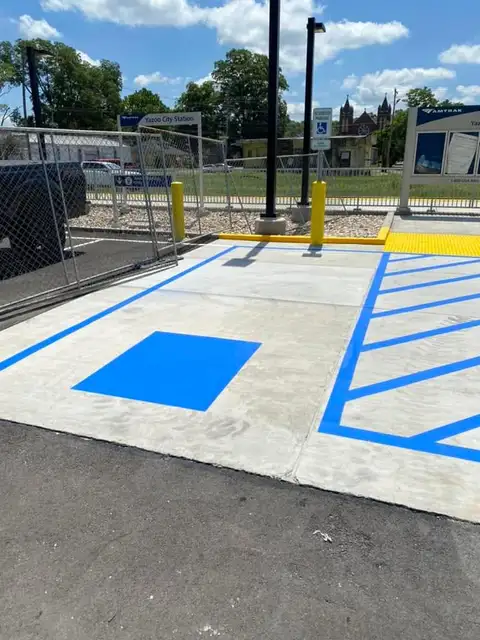
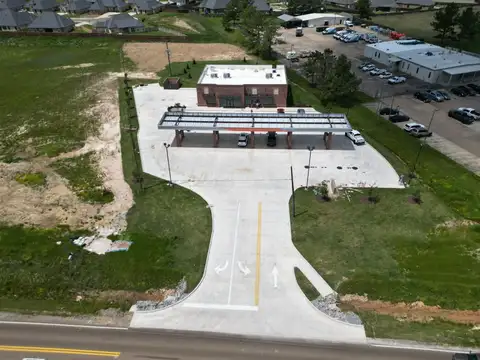
Safety lines take a beating. Foot traffic, carts, pallet jacks and weather wear them down, and a faded safety line is almost worse than none because people stop trusting it. Good prep is what makes paint last: clean, dry surface, no dust or oil, and loose or broken concrete fixed first.
Outdoors, the line has to hold up to sun, rain and Delta humidity. Indoors, it has to handle traffic and cleaning. Edges that are chipped or crumbling should get minor concrete repair before the line goes on, or the paint will break off with the edge. Ask about it when we come look. Restriping on a regular schedule keeps the warning bright.