When lot owners ask how long their lines will last, the answer starts with the material. Two come up most: waterborne traffic paint and thermoplastic. Each has a place. This guide compares how they go down, what they need from the weather and the surface, how long they last according to federal and state research, and where each one makes sense on a commercial lot.
Waterborne traffic paint
Waterborne paint, also called latex or water-based paint, is sprayed on like a thin coat. A Montana DOT study describes conventional traffic paint going down 15 to 20 mils thick, with glass beads mixed in or dropped on top. One waterborne paint data sheet we checked calls for at least 12 mils wet, which it figures at about 400 feet of 4 inch line per gallon, and lists a no pick-up time of 10 minutes at most.
Compared with older solvent-based paint, waterborne paint avoids flammable solvent and solvent cleanup. The Montana study notes that solvent-based alkyd paint is highly flammable and needs solvent cleanup, while latex paint is more sensitive to temperature. That temperature limit is the main trade-off, and it is why waterborne striping gets scheduled around cold snaps and rain.
VOC limits
Federal rules cap the volatile organic compounds in traffic marking coatings. Under 40 CFR Part 59, Subpart D, the limit for traffic marking coatings is 150 grams of VOC per liter. The waterborne data sheet we checked lists 100 grams per liter. If your property has its own environmental standards, ask for the product data sheet so you can see the number.
Thermoplastic
Thermoplastic is a solid material that is heated and applied molten. The Montana study gives an application temperature of about 425 degrees F, by spraying or extrusion. Sprayed thermoplastic goes down 60 to 90 mils thick, and extruded goes down 90 to 120 mils, several times thicker than paint. On asphalt it bonds chemically, and light grinding can improve the bond.
It is picky about conditions. The same study says surface and air should be at least 55 degrees F and that thermoplastic is sensitive to surface prep and weather. An FHWA guide notes newer mixes contain sand or other coarse material to reduce slip hazards. Extruded thermoplastic has to be milled out before an overlay.
How long each lasts
An FHWA guide on pedestrian facilities lists approximate service lives of about 9 to 36 months for paint and about 72 months for thermoplastic, with epoxy around 48 months and preformed tape 48 to 96 months. The Montana study puts thermoplastic at 4 to 7 years. Paint life drops as traffic goes up. On roads, the Montana study found about two years under 5,000 vehicles a day and less than one year above 10,000.
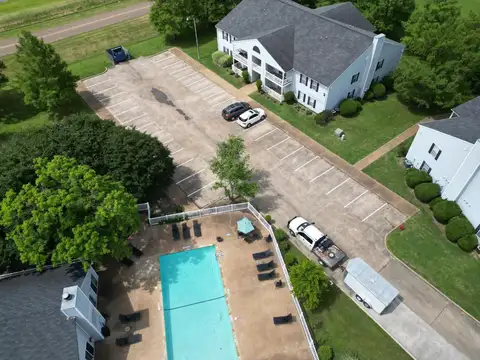
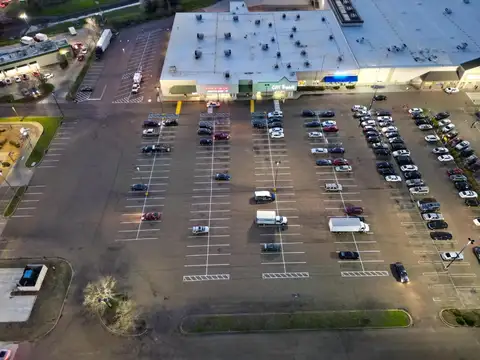
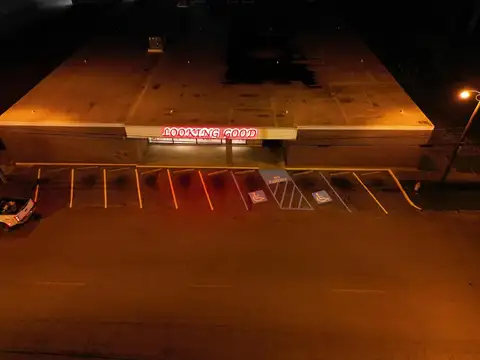
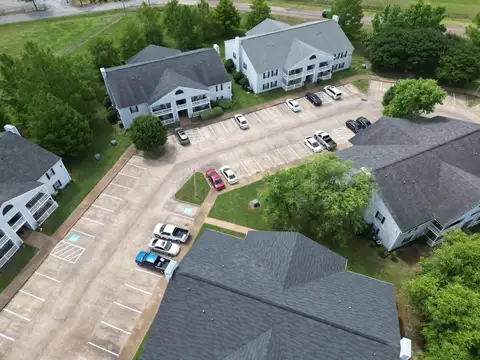
Those figures come from public roads and crosswalks. On a parking lot, the stall lines see far fewer tires than the entrance, the drive lanes and the stop bars, so wear is uneven across the same lot. That is why touching up entrances and drive lanes between full restripes can make sense.
Cost over time
Thermoplastic costs more up front. Communities in the FHWA guide reported its cost averaged almost five times that of paint, though it lasts longer. Whether it pays off on a lot depends on two things: how much traffic a marking gets, and how often the lot is sealcoated. Sealer goes over every line on the lot. If you seal every few years, a long-life material may get covered before it wears out, and waterborne paint matches that cycle.
Weather, surface and night visibility
Waterborne paint needs a dry surface and warm enough weather. The Montana study says latex paint needs asphalt above 50 degrees F. A university spec sets 50 to 95 degrees F for water-based paint, and the data sheet we checked lists a 40 degree minimum. Concrete is harder. The Montana study says conventional paints do not adhere well to concrete and that epoxy did better there. Follow the manufacturer's directions for your surface.
Glass beads make lines reflect headlights at night. The university spec drops beads on before the paint sets, and a Texas DOT synthesis says inspectors check bead dispersion and depth. Lots used after dark, like hospitals, apartments and distribution centers, are where beads matter most. Bead depth matters too. A line with beads sunk too deep or sitting too shallow does not reflect well.
Which one fits your lot
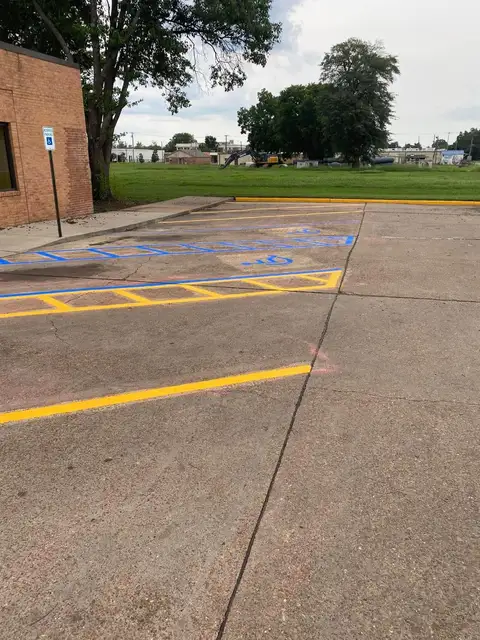
For stall lines and routine restriping after sealcoat, waterborne paint fits the cycle of most lots. High-wear spots like entrance stop bars, crosswalks and arrows at busy drives are where a longer-life material gets discussed. Straight Line Services stripes parking lots of all sizes in Mississippi, Louisiana, Tennessee, Alabama and Arkansas. Tell us how your lot is used and how often it is sealed, and we will talk through which material makes sense. Call or text 662-719-7737.
Need this done? Straight Line Services gives free estimates from Ruleville. Call or text 662-719-7737.
Free estimate