There are two main ways to open up wooded ground. A forestry mulcher grinds trees and brush where they stand and leaves the chips on the ground. A track machine pushes the timber over, roots and all, and piles it into windrows. Both work. They just do different jobs and leave the land in different shape. Here is how to tell which one fits your tract, or whether it needs some of each.
What each method actually does
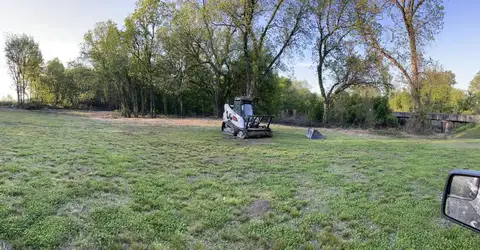
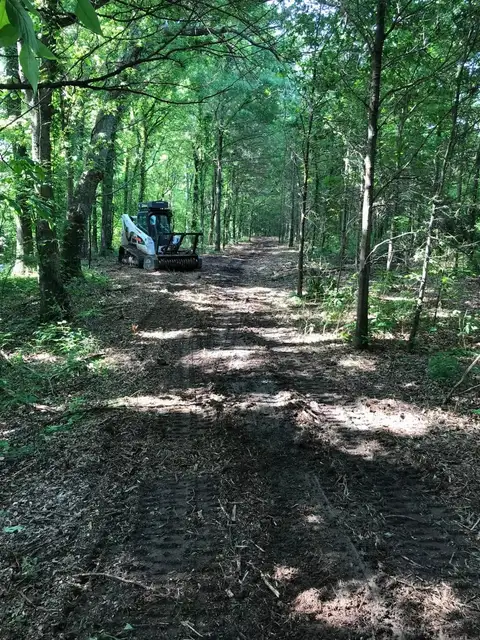
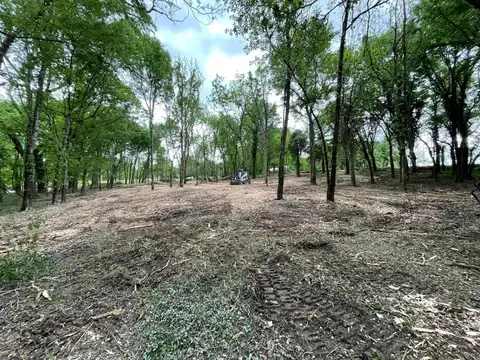
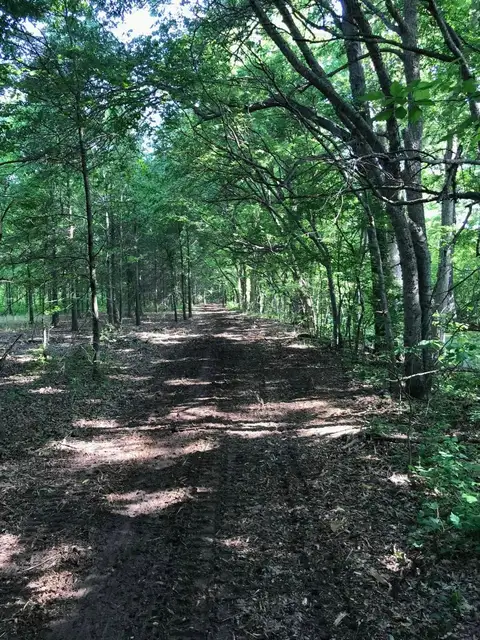
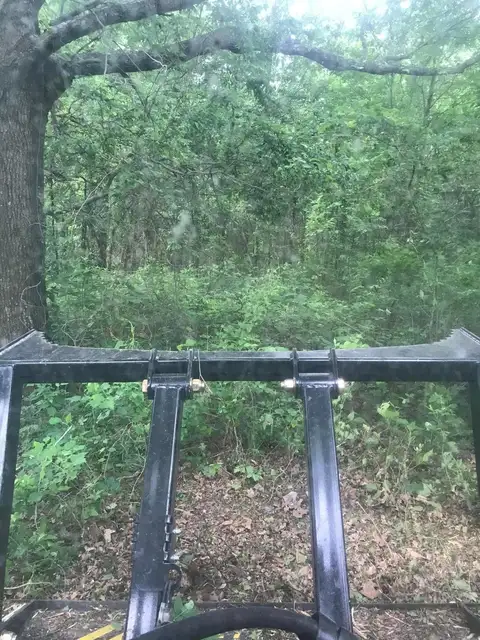
A forestry mulcher is a rotating cutting head, often on a tracked skid steer, that shreds standing brush and small trees into a layer of chips. Virginia Tech Extension notes these heads can be mounted on large or small tracked and wheeled machines. Nothing gets piled or hauled. The trees are gone, but the stumps and roots stay in the ground.
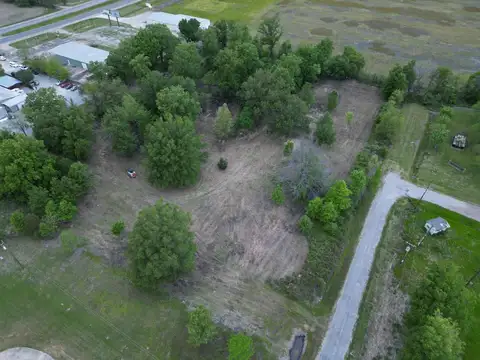
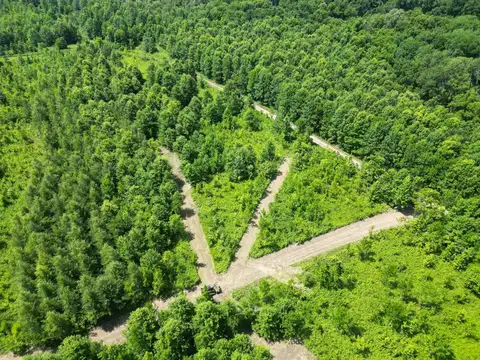
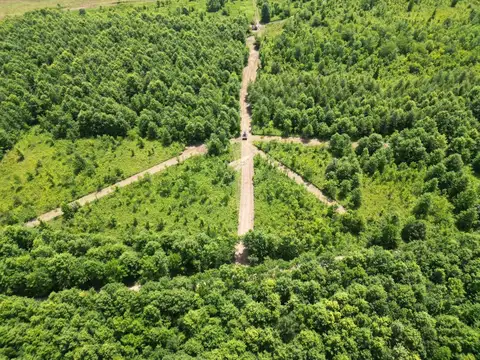
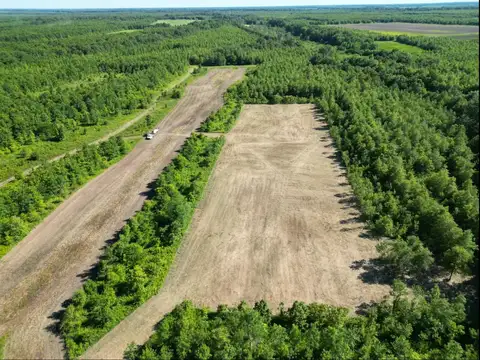
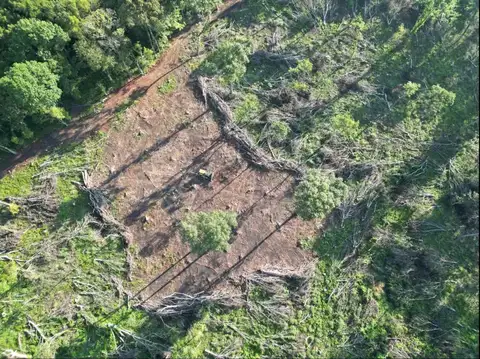
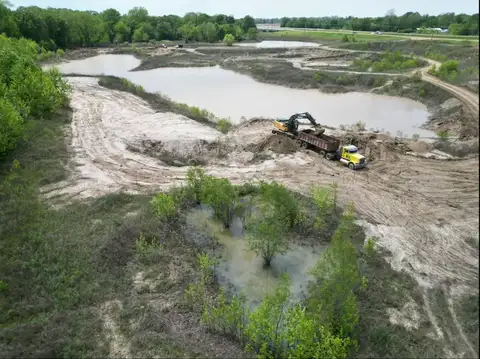
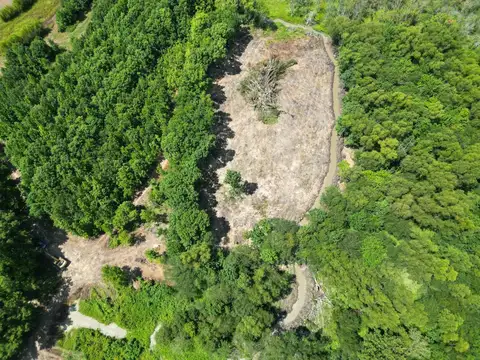
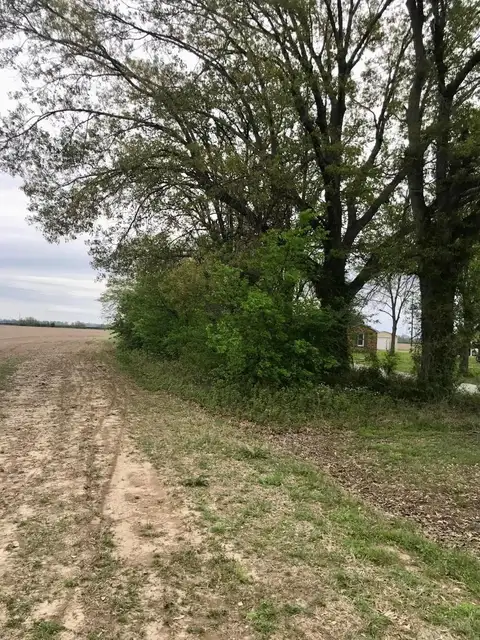
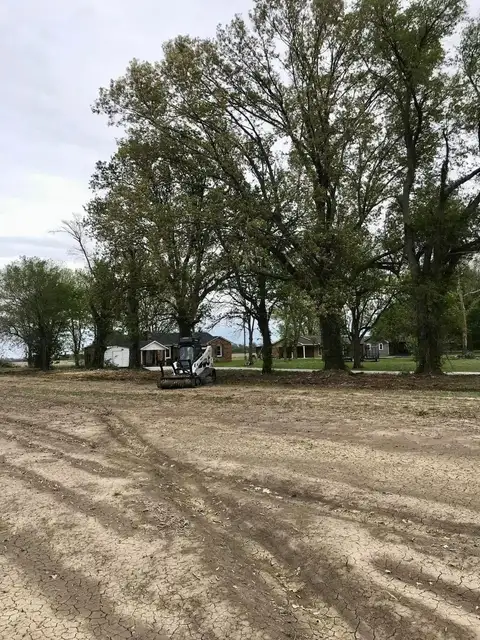
Pushing, or dozer-style clearing, uses a heavy track machine to push trees over and pull the root ball with them. The timber, stumps and brush get stacked into long windrows at the edge of the work. What you get is bare dirt that can be graded. That is how B&M clears lots and tracts out of thick timber, with the timber pushed up in windrows.
Where mulching is the better fit
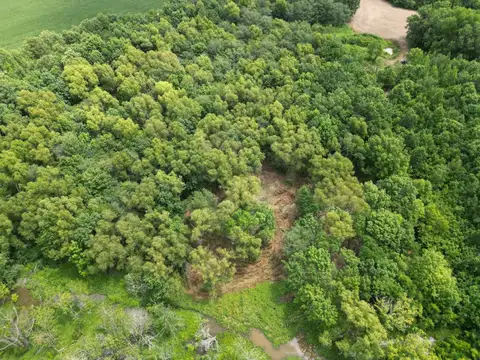
Mulching shines on brush, thickets, small trees and understory. It is a good fit for shooting lanes, trails, fence lines, cleaning up under good timber, and select clearing where you want to keep certain trees. Because it does not tear up the ground, you can work close to trees you plan to keep.
Virginia Tech's guide calls mulching an excellent way to maintain and even increase soil organic matter and reduce erosion, since the chips stay on the surface. University of California guidance adds that the mulch layer can reduce erosion, hold soil moisture and moderate soil temperature. On a tract where you want ground cover back fast, that is a plus.
Where pushing timber is the better fit
Big timber is where mulching runs out of road. University of California guidance says mulching cost per acre rises exponentially as tree diameter increases, that large standing trees are almost always cost-prohibitive to mulch, and that hardwoods often cost more to process than conifers. A Delta tract full of mature hardwoods usually calls for pushing.
Pushing is also the right call when the land has to be graded. A house pad, pond, field or arena needs the stumps and roots out so the dirt can be cut, filled and compacted. Mulching leaves the root systems in place, which is fine for a lane but not for a slab.
What each leaves behind
Pushing leaves open dirt and windrows. The Virginia Tech guide is blunt about the downside: bulldozing nearly always destroys the topsoil, and restoring it adds time and cost. An excavator with a root rake disturbs less but still does not eliminate topsoil loss. The windrows also have to be dealt with, either left, burned where allowed, or ground up.
Mulching leaves a chip layer and stumps. How thick that layer is matters if you plan to plant. University of California guidance notes understory plant diversity can drop significantly when the mulch bed is deeper than 4 inches. For a food plot, plan on working the mulch into the soil or thinning it before you seed.
Regrowth is the catch with mulching
Mulching only takes off what is above the ground. University of California guidance says shrubs and trees can regrow from the roots, so follow-up with herbicide, mowing, fire or grazing may be needed. Virginia Tech notes most hardwoods resprout unless the root system is killed, and that labeled herbicides applied soon after cutting are the cheapest and most effective tool.
If you mulch a lane and then leave it alone for two seasons, expect sprouts. Plan to mow it or treat it. A pushed tract has far fewer roots left to come back, though seeds and sprouts from the edges will still move in. Either way, budget for some follow-up work in the first year or two.
Wet ground and the Delta
Delta clay is slow to drain. The USDA description of Sharkey soils lists them as poorly to very poorly drained with very slow permeability. Any machine can rut that ground when it is wet, and heavy pushing on saturated clay makes a mess that has to be fixed later. Ruts in clay also hold water and make every later pass harder.
University of California guidance recommends operating on dry soils, driving on slash and keeping machine movement to a minimum to limit compaction. That applies to both methods. Whether you mulch or push, a dry spell is the best time to clear Delta ground. On flat, slow-draining ground, a few dry days after a rain can be the difference between clean work and ruts.
Debris and burning
Windrows from pushing are a lot of fuel in one place. Burning them falls under MDEQ's open burning rules for land-clearing debris: not within 500 yards of an occupied dwelling without a forced-draft air curtain system, not within 50 yards even with one, and never during a Forestry Commission high fire danger alert or where local ordinances prohibit it. A county burn ban stops it too.
Mulching avoids the debris question since the material stays spread on site. University of California guidance does warn that a mulched area carries more surface fuel for a while and that densely packed chips can smolder for a long time if they catch fire. Keep that in mind if you burn nearby.
Using both on one tract
A lot of jobs need both. A common plan is to push the area where a house, barn, pond or pad will go, then mulch the edges, the lanes to the stands and the understory under the trees you are keeping. That puts each method where it does the most good.
B&M runs a tracked skid steer with a forestry mulching head and a track loader, so one job can cover both. Call or text 662-719-7737 and we will talk through what you want the land to be and which approach fits each part of it. If you have a map or photos of the tract, have them handy when you call.
Need this done? B&M Land Management gives free estimates from Ruleville. Call or text 662-719-7737.
Free estimate