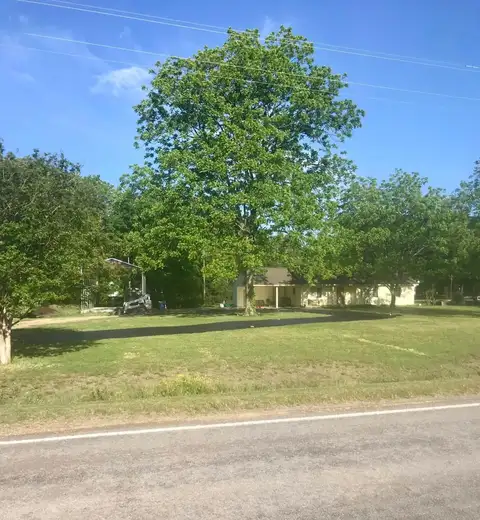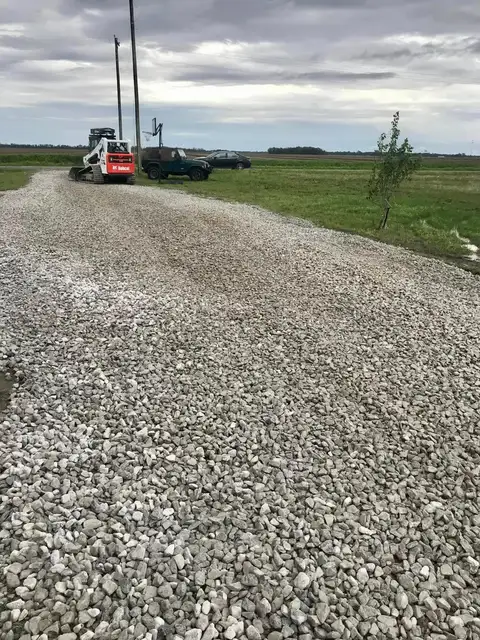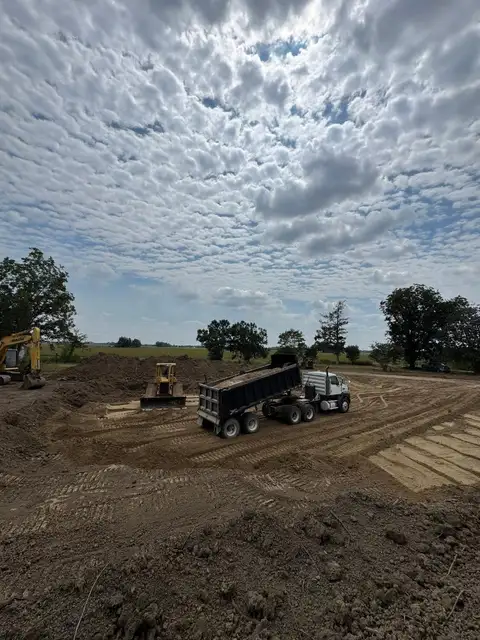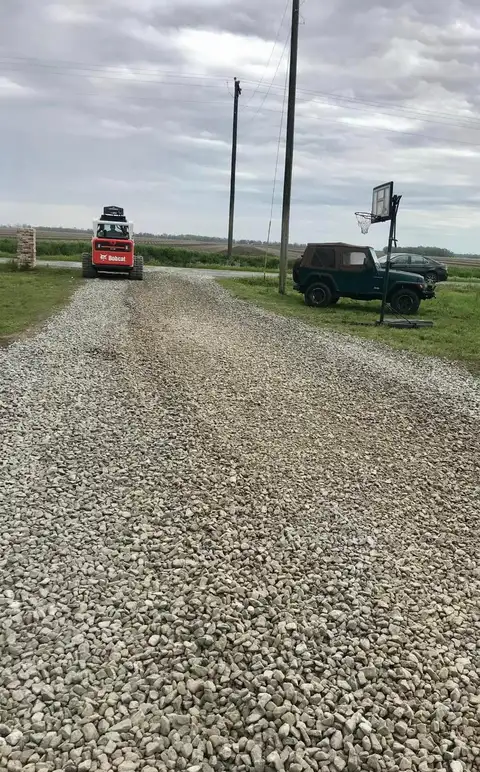
Delta buckshot clay grows great crops and holds pond water, but it moves. It swells when wet and shrinks and cracks when dry, and that movement can crack a foundation. A good house pad deals with that before the slab is ever poured: the right fill, built up in compacted layers, shaped so water runs away. Here is what NRCS, MSU Extension and building guidance say about building on this ground.
What buckshot clay is
MAFES describes much of the Delta's flat ground as slack-water clayey soils, commonly called buckshot. MSU Extension explains the name: when these clays dry, small round clods form at the surface that look like shotgun buckshot. Sharkey is one of the Delta's major soils. Not every Delta acre is buckshot, but a lot of the flat ground is.
The USDA description of Sharkey soils classifies them as very-fine, smectitic clays, poorly to very poorly drained, with very slow permeability. It notes that in most years, cracks 1 to 3 centimeters wide open to a depth of 20 to 24 inches or more. University of Missouri Extension describes Sharkey as shrink-swell clay that expands and contracts with wet and dry cycles and is sticky when wet.
Why that matters for a house
An MSU Extension article on dry clay soils explains the problem. When these clays take on water, they expand. When they dry, the particles shrink and leave voids. As the clay shrinks away from a conventional footing, it moves it. Movement can come from either direction: the soil drying out after the slab is poured, or getting wetter.
MSU's engineer noted that foundations are usually poured when soil moisture is decent. Afterward the ground gets wetter or drier, it moves, and structures crack. Deeper footings, around 36 inches to reach a more constant moisture zone, and keeping moisture steady around the house were both mentioned as ways to reduce it. A well-built pad helps by putting the house up on controlled fill and keeping water from collecting at the slab.
Check soils and flood risk first
Before you pick a pad height, know what you are building on. Your local NRCS office or USDA service center can help with soil maps for your tract. Where expansive soil is likely, the building official can require a soil test. The International Residential Code uses lab tests, including a plasticity index of 15 or more, to flag expansive soil, and sends foundations on it to engineered design.
Check the FEMA flood map too. FEMA's guidance on building on fill says the finished fill surface must be at or above the base flood elevation after compaction and settlement. Filled land stays in the flood zone on the map until FEMA issues a Letter of Map Revision based on Fill (LOMR-F). Your local floodplain official can tell you what applies.
Strip it and build in layers
The base of the pad has to be clean. The residential code requires fill under slabs to be free of vegetation and foreign material and compacted to support the slab. Grass, roots and topsoil should come off before fill goes on, because they rot and settle. Old fence posts, stumps and trash in the pad area have to come out too.
Fill goes on in layers, each compacted before the next. FEMA's fill guidance cites ASCE 24, which specifies maximum 12-inch lifts. In some cases FEMA calls for fill compacted to at least 95 percent of standard Proctor density. Moisture matters as much as the machine. The NRCS pond handbook notes the right moisture has to be kept during construction for thorough compaction. Dirt that is too dry or too wet will not lock up.
Choosing the fill
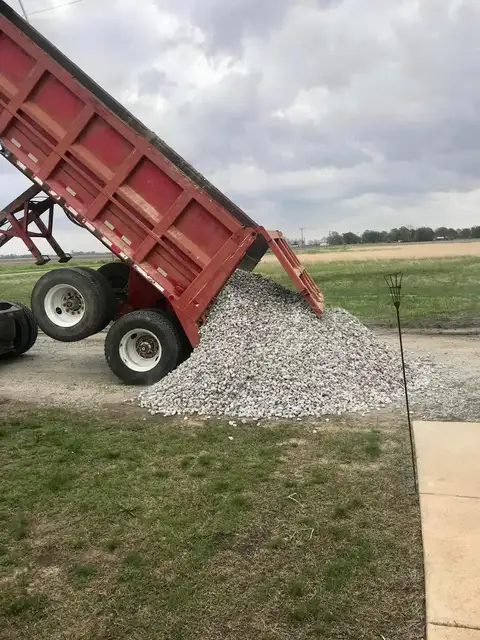
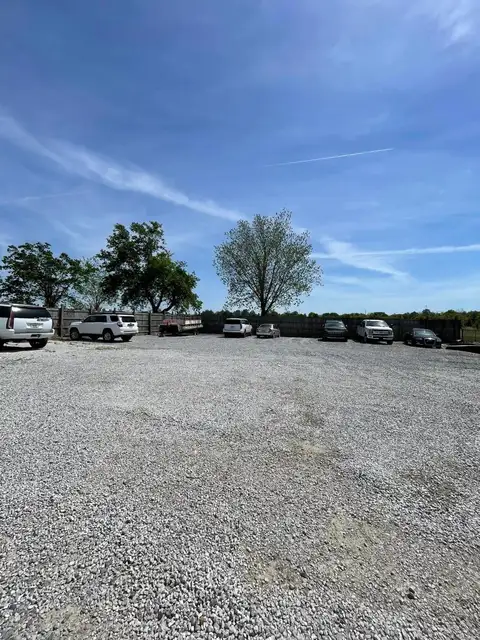
The fill under the slab is usually set by your builder, engineer or building department, and on expansive ground the code leans on engineered design. Ask before the trucks start running so the right material shows up. Some sites need soil testing before anyone can say which fill is right.
Right around the foundation, a homeowner guide from the Geo-Institute of ASCE says to use clay, not sandy soil, for fill next to the foundation. Sand lets water soak down along the slab edge instead of running off. FEMA's guidance also favors fine-grained, low-permeability soils in some fill situations. Plan for shrinkage, too. Levee builders using Delta clay add about 10 percent to fill volume for shrink and settling, per SRAC.
Shape it so water leaves
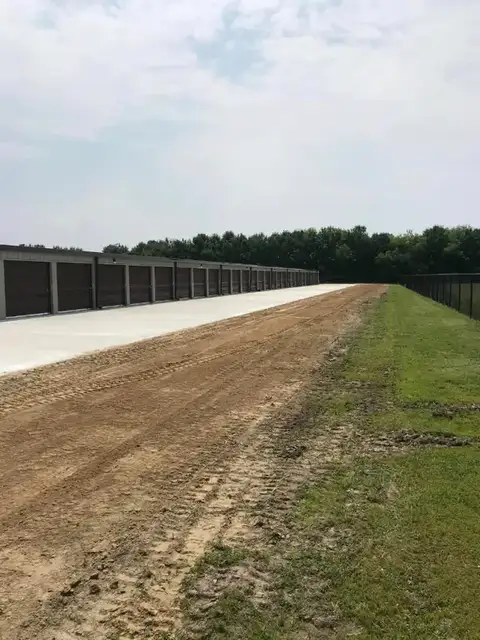
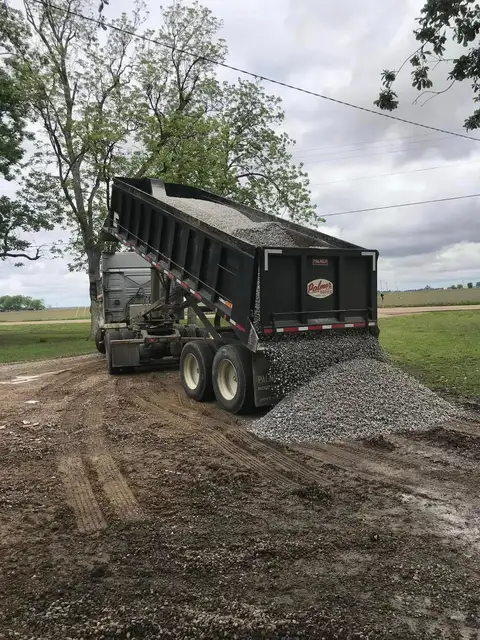
Drainage is where most pad problems start. The residential code calls for the grade to fall at least 6 inches within the first 10 feet away from the foundation, and for hard surfaces within 10 feet of the house to slope at least 2 percent. The Geo-Institute guide asks for at least 3 inches of fall in 5 feet and keeping the dirt line several inches below the top of the foundation.
That same guide says to run downspouts at least 3 feet out, keep sprinkler heads at least 5 feet from the foundation, plant trees farther away than their mature height, and keep soil moisture as even as you can around all sides. On flat Delta ground, the pad also needs somewhere for water to go once it leaves the house: a swale, ditch or culvert.
Timing the work
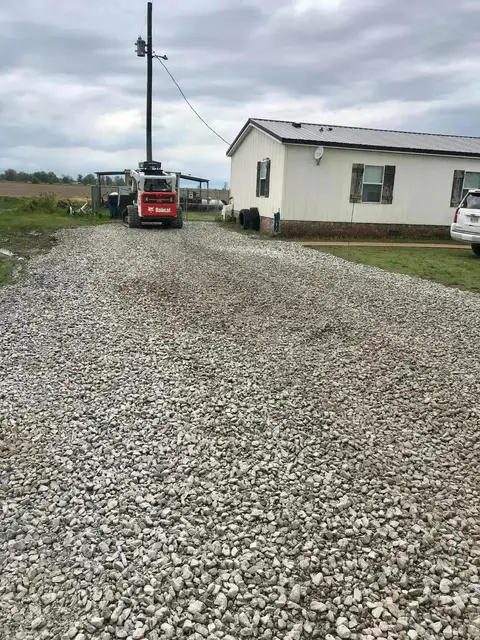
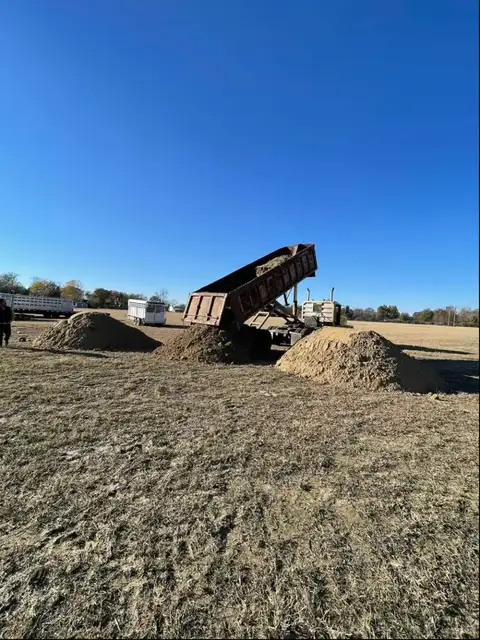
Delta clay is hard to work when it is wet and hard to compact when it is bone dry. A dry stretch with some moisture still in the ground is the best window for pad work. Wet clay ruts, smears and will not compact right. B&M hauls in fill, spreads it and shapes pads with a track loader. Call or text 662-719-7737 to talk through your pad and get a free estimate before any work starts.
Need this done? B&M Land Management gives free estimates from Ruleville. Call or text 662-719-7737.
Free estimate