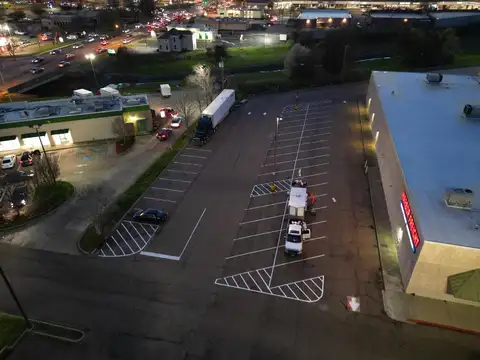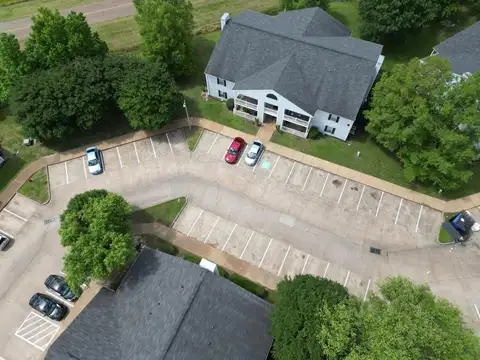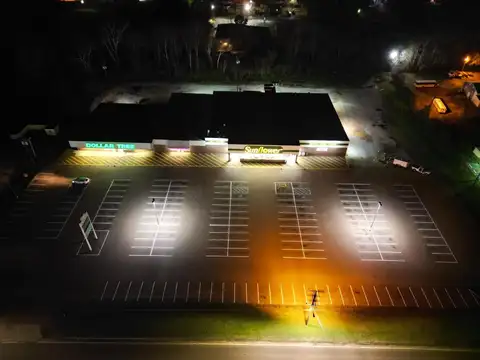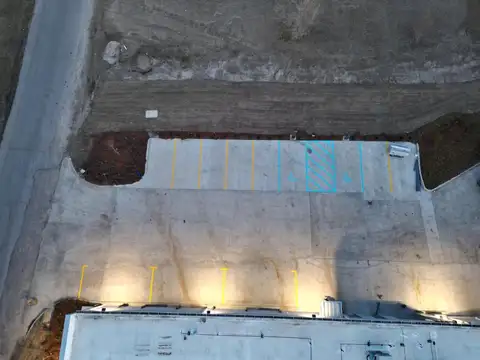
We do not post prices, because no two lots are alike. What we can do is explain what moves the number, so you can plan a budget and compare bids on equal terms. Most of it comes down to how much line goes down, what kind of markings you need, what shape the surface is in, which material is used, and when and how the work can happen.
How much line goes down
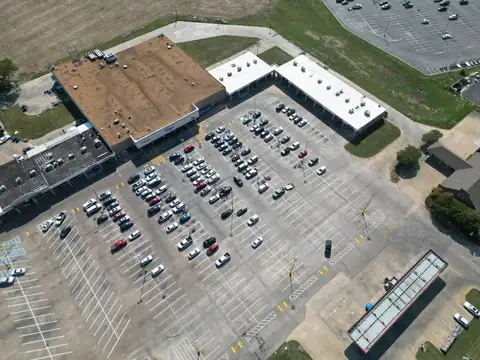
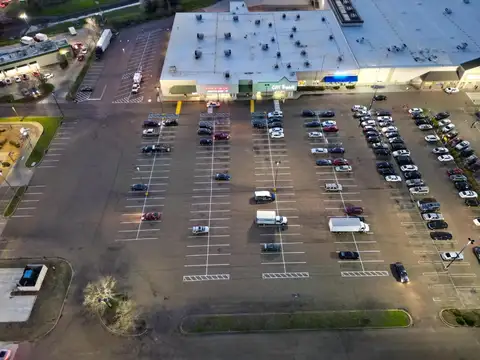
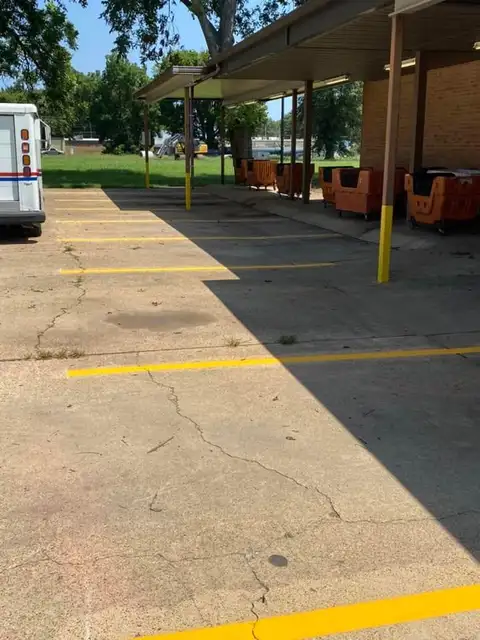
The biggest driver is total footage. Every stall line, drive lane edge, stop bar and crosswalk adds up. A 300 stall lot at a shopping center takes far more paint and time than a 40 stall church lot. Paint use is measurable. One traffic paint data sheet we checked calls for at least 12 mils wet thickness, which it puts at about 400 feet of 4 inch line per gallon. Wider lines, double lines and thicker coats all use more.
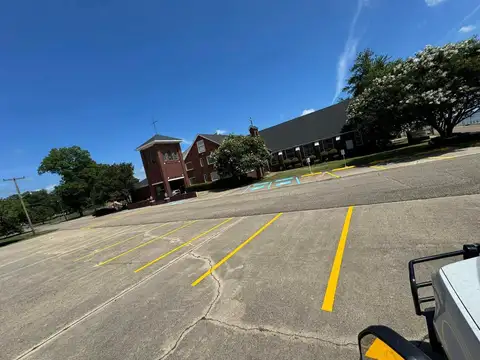
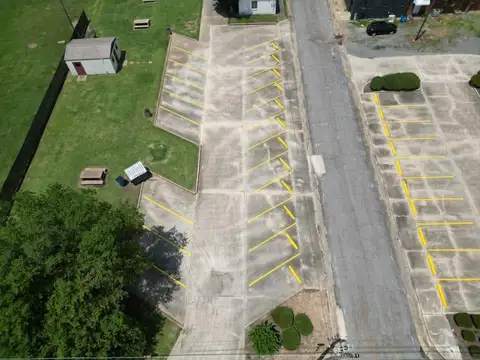
Restripe over old lines or lay out new
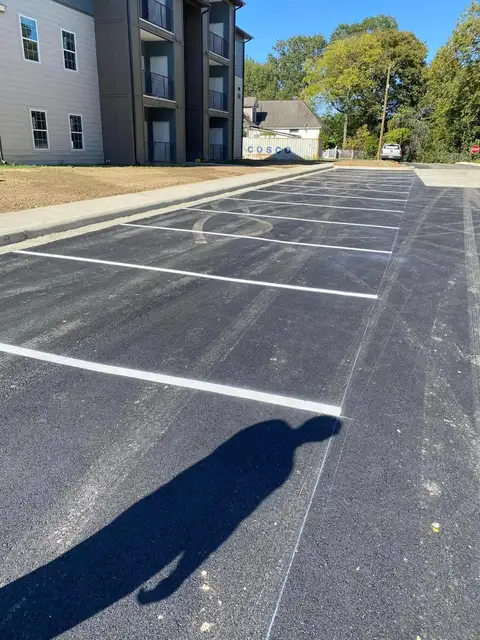
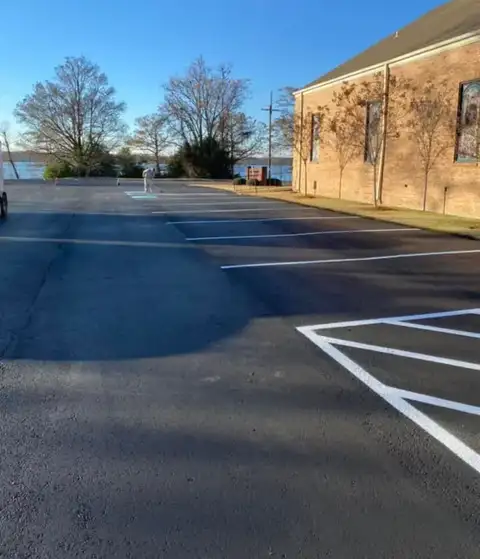
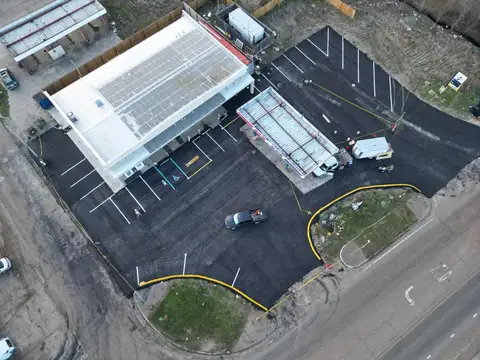
Repainting lines you can still see is the simplest job, because the layout is already there. A fresh lot or a freshly sealed lot has no lines to follow, so the whole layout has to be measured and marked before paint. One county parking lot spec has the contractor spot the line locations 25 feet on center and notify the engineer at least 3 days before painting.
Changing a layout adds work. Old lines that no longer fit need to come off. The same spec says not to cover old markings with blank paint and calls for shot blasting or water blasting, without gouging the pavement more than 1/16 inch. Removal takes more time and equipment than painting.
Symbols, words and crosshatching
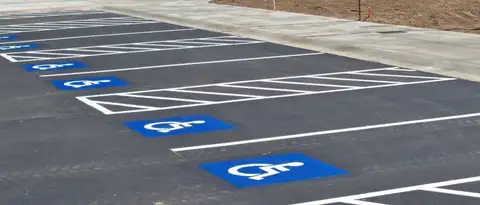
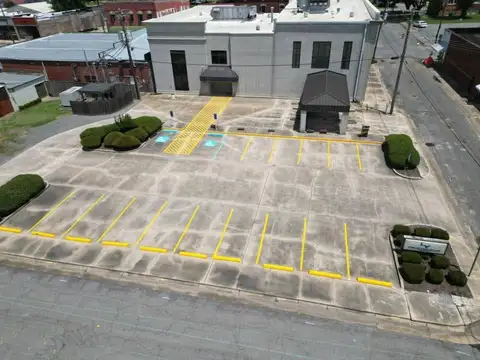
Stencil work takes longer per square foot than straight lines. Accessible stall symbols, directional arrows, STOP and FIRE LANE lettering, and crosshatched aisles and no-parking zones all add time. Fire lanes can add a lot. One fire lane checklist posted on the City of Tupelo's website calls for red curbs stenciled with white lettering every 50 feet. Your local fire marshal's standard sets how much lettering your lane needs.
Signs are a separate item. Each accessible space needs a sign with the International Symbol of Accessibility mounted at least 60 inches to the bottom of the sign, and van spaces add "van accessible." Ask whether a bid includes posts and signs or just paint. Van spaces add more paint too, since a van space needs either a 132 inch space with a 60 inch aisle or a 96 inch space with a 96 inch aisle.
Paint type
Waterborne traffic paint and thermoplastic are priced very differently. In an FHWA guide on pedestrian facilities, communities reported that thermoplastic cost almost five times as much as paint on average, though it lasts longer, about 72 months versus roughly 9 to 36 months for paint. Thermoplastic is applied molten, around 425 degrees F according to a Montana study, so it takes heating equipment and more set-up. For most stall lines, paint is the practical choice. High-wear spots are where a longer-life material gets discussed.
Surface condition and prep
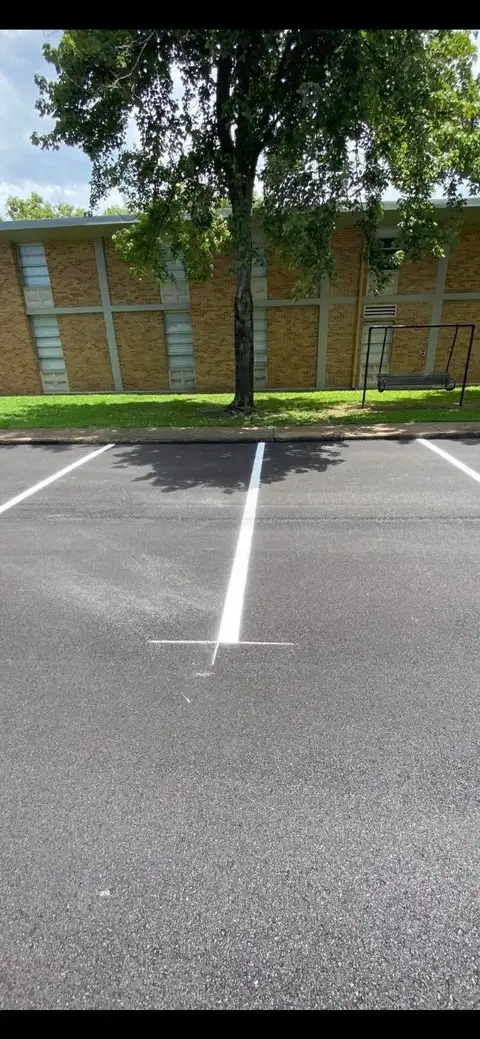
Paint needs a clean, dry surface. Specs call for pavement free of dirt, debris, oil, grease and gasoline. One county spec says to scrub oil spots with a degreaser and seal oil-soaked areas before painting. A lot covered in sand, leaves or oil drips takes more prep time before the first line goes down. Loading areas, drive-throughs and dumpster pads can collect the most grime, so they may need the most cleaning.
Cracks, potholes and broken edges matter too. Paint on failing asphalt breaks up with it. Straight Line Services does minor concrete and asphalt repair so a lot is ready for paint, and that work gets priced as part of the job when it is needed. It is easier to fix a pothole in a drive lane before painting than to repaint lines across a fresh patch later.
Timing, access and phasing
A lot that can be closed for a few hours is easier to stripe than one that must stay open. Hospitals, apartment complexes and distribution centers may need the work done in sections so traffic keeps moving. Each section needs to be blocked off until the paint is ready for traffic. One spec calls for protecting lines for at least 30 minutes or as the manufacturer recommends.
Weather affects the schedule. Specs we checked set a minimum of 50 degrees F for water-based paint and no rain or moisture on the pavement. A new lot or a fresh sealcoat also has to cure before paint, which can push the date back. A rainy week can move a job, and that is better than paint that will not hold.
Code work changes the scope
Getting the layout right the first time is cheaper than repainting it. Under Access Board guidance, resurfacing, resealing or reconfiguring a lot means accessible spaces must be provided, so a restripe after sealcoat may need added accessible or van stalls. Fire lanes have to match what the local fire code official approves. Knowing those requirements up front keeps a job from turning into two jobs.
Travel is part of every job too, since the truck and crew have to get there and set up whether the lot is big or small. Combining striping, ADA work and fire lanes in one visit helps, and so does planning the striping date around your sealcoat date. We work in Mississippi, Louisiana, Tennessee, Alabama and Arkansas. Call or text 662-719-7737 for a free estimate.
Need this done? Straight Line Services gives free estimates from Ruleville. Call or text 662-719-7737.
Free estimate