Why repair before you stripe
Water is what kills pavement. It gets into an open crack, softens the base, and the crack becomes a pothole. Paint over that crack does nothing to stop it. Filling cracks and patching small holes before striping keeps water out and gives the new lines a sound surface to bond to.
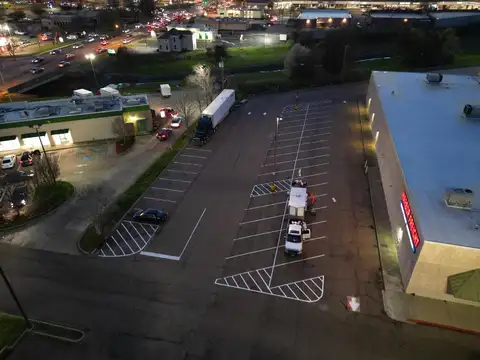
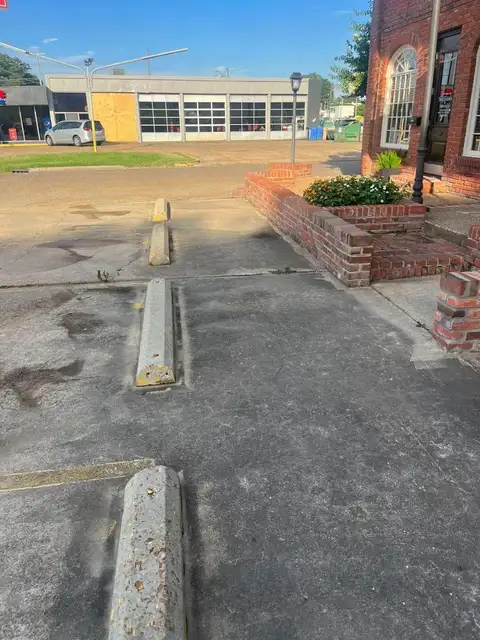
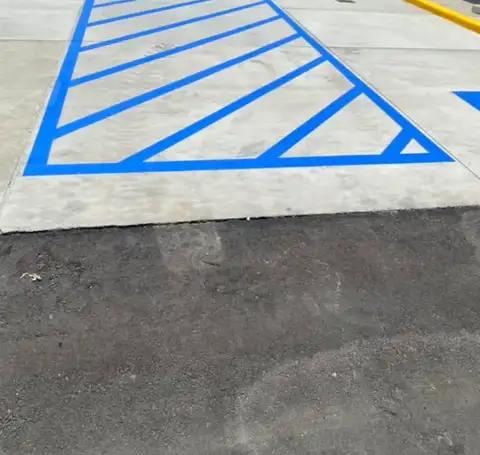
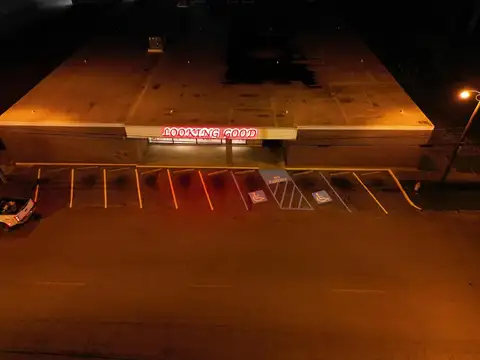
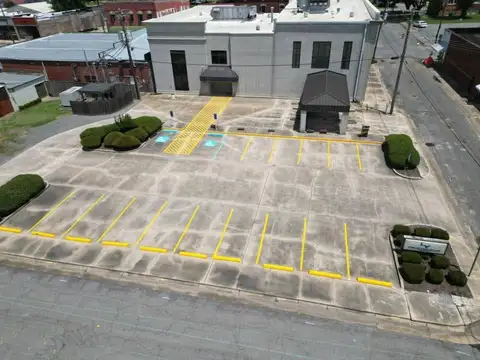
It also matters for how the lot looks and works. Stall lines that dip into a hole or wander around a patch look sloppy. An accessible space or access aisle with a broken surface is a trip hazard for the people it is meant to serve. Fixing the small stuff first means the finished lot looks right and stays that way longer.
What counts as minor
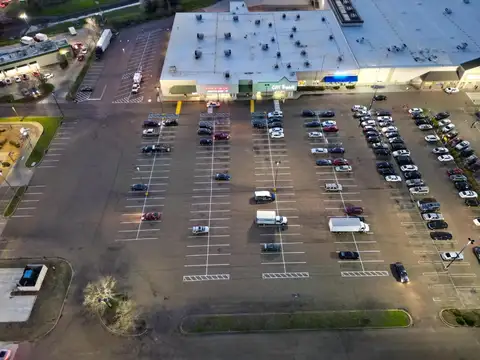
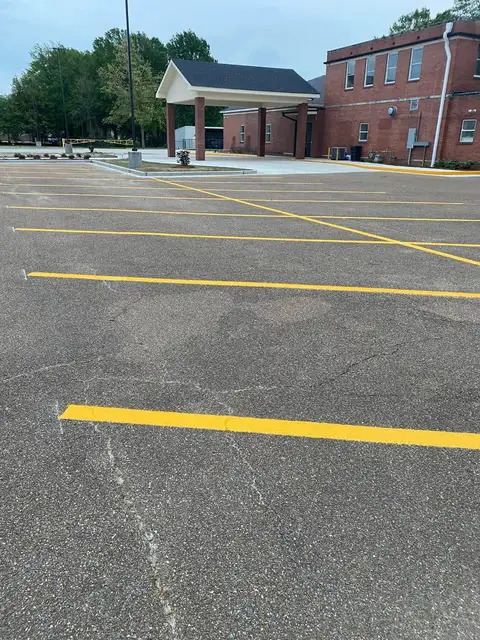
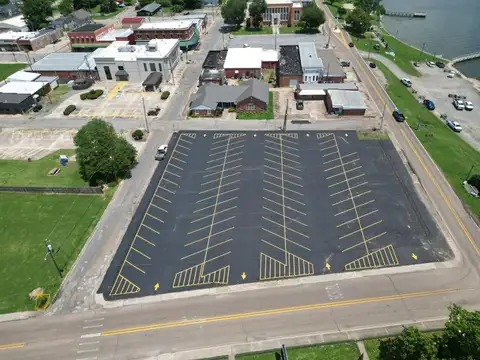
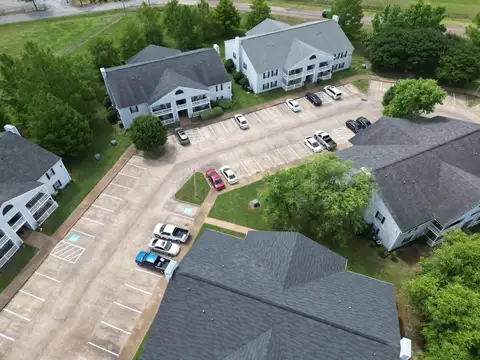
Minor repair means small, local problems: a few potholes, cracks that are open but not spread across the whole lot, broken concrete at a curb or a drive edge, a small sunken spot. These can be fixed in place before we paint, usually on the same trip as the striping. The goal is a sound, clean surface under every line, every stall and every accessible space, so the new paint has something solid to hold on to.
Some problems are bigger. Alligator cracking across a whole section, a base that has failed, deep ruts from trucks or a lot that holds water everywhere point to more than a patch. That is a paving or drainage job. We will tell you plainly what we see. If drainage or grading is the cause, B&M Land Management, at the same number, does grading and drainage work.
Hard ground on pavement
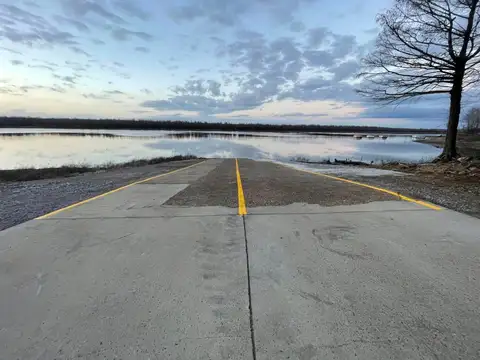
Much of the Mississippi Delta and the river lowlands sits on heavy clay soils that swell when wet and shrink when dry. That movement under a lot opens cracks along edges and joints, especially after a long wet spell followed by a dry one. Flat ground that drains slowly lets water sit on the surface and find every crack.
That does not mean every lot is doomed. It means cracks should be dealt with early, and low spots that hold water deserve a look before they turn into holes. When we come out for a striping estimate, we look at the surface with that in mind and tell you what we would fix now and what can wait.
Repairs around accessible spaces
The 2010 ADA Standards require accessible parking spaces and their access aisles to be stable, firm and slip resistant, and no steeper than 1:48 in any direction. Changes in level along the route to the door are limited too. Broken pavement, a pothole in an access aisle or a heaved slab at the curb ramp can be a problem.
Minor repairs can fix a broken surface. They cannot fix a space that sits on too steep a slope. If the slope is wrong, the better answer is usually to move the accessible space to a flatter spot near the entrance during the new layout. We check this when we lay out ADA spaces, so the repair and the layout work together.