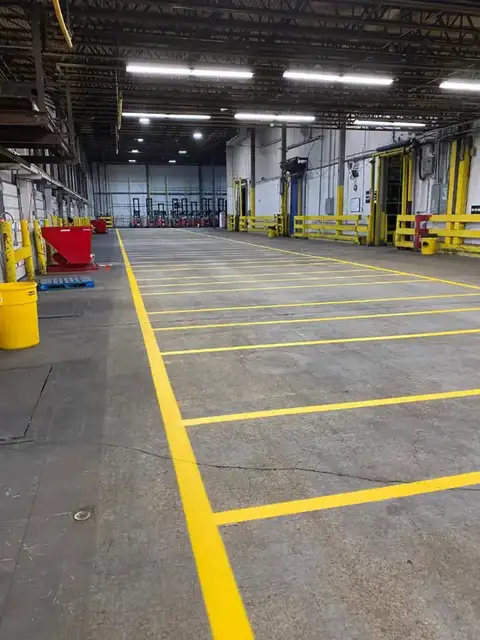
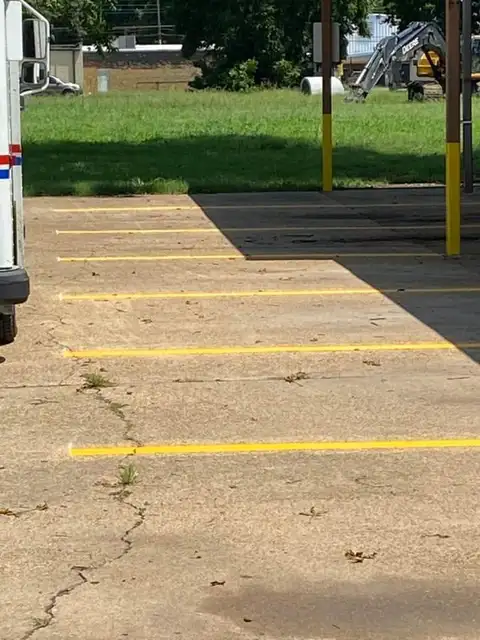
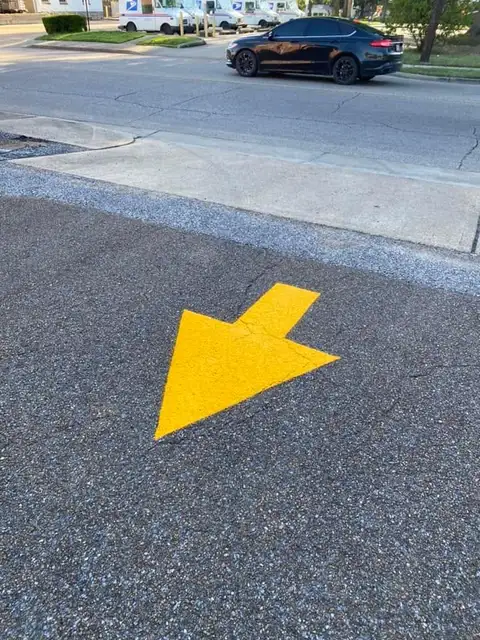
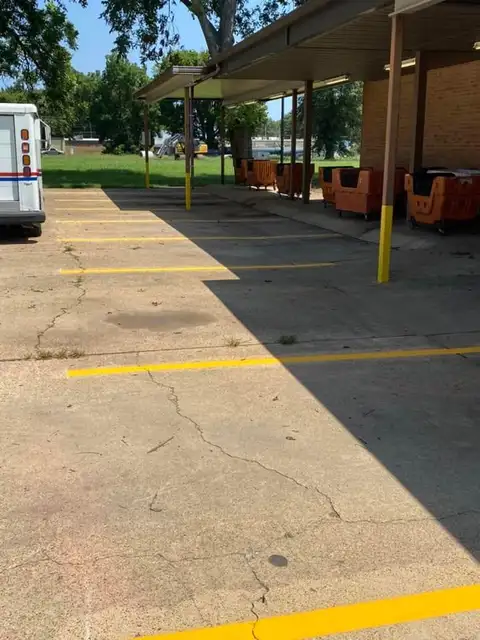
Birmingham lots we stripe
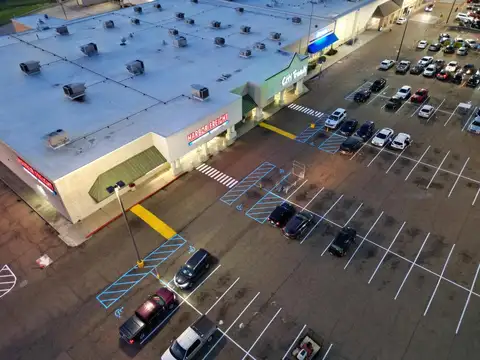
UAB is the city's biggest employer, and its hospital and campus have garages and surface lots that run full all day. Other hospitals and clinics around the city add more medical lots with heavy visitor traffic and a lot of accessible parking. On medical lots, clear stalls, arrows, crosswalks and drop-off zones help people who are already having a hard day find their way.
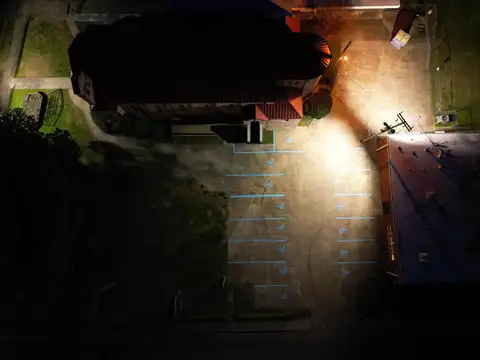
Birmingham also has a lot of hills. Lots are often built on slopes, terraced, or squeezed between buildings, which makes layout and ADA stall placement trickier than on flat Delta ground. Add churches, schools, strip centers, the shopping areas out toward Hoover, and the warehouses and plants on the industrial side of town, and there is a wide mix of work.
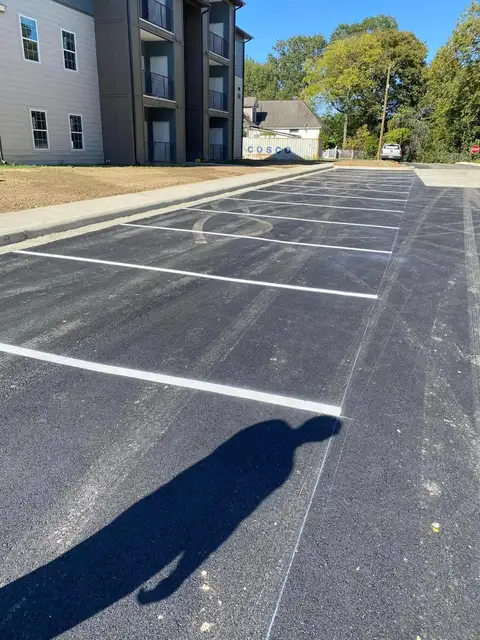
Heat, rain and hills
Birmingham gets hot, humid summers and plenty of rain. Sun fades paint and heat softens asphalt. On sloped lots, rain runs fast across the pavement and carries grit with it, wearing lines down where water flows. Entrances, drive lanes and the rows near the door go first. Older lots may also have settled or cracked where the ground moved.
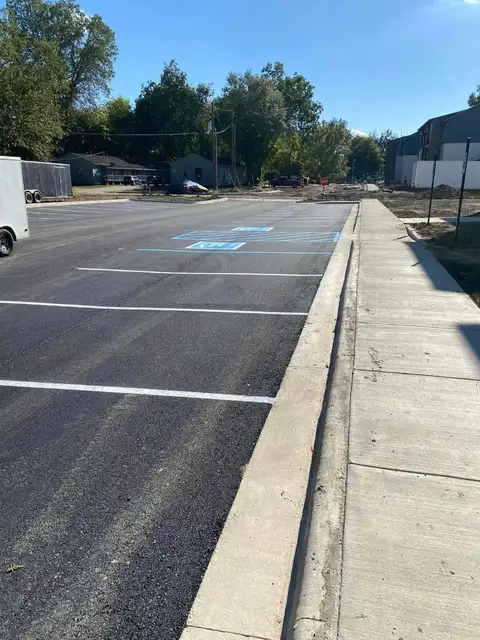
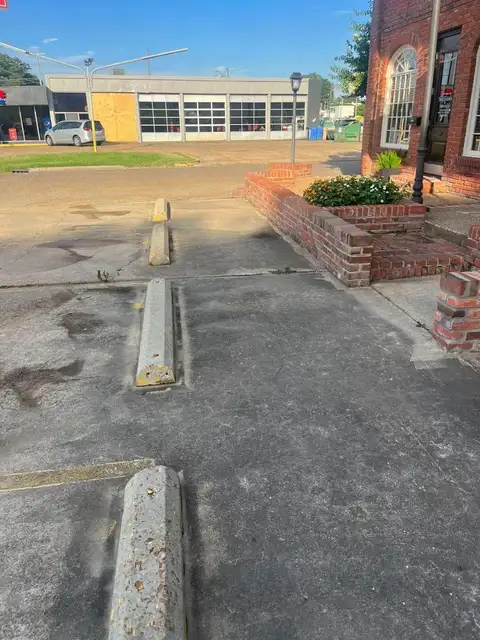
We stripe on dry pavement with enough time for paint to set. On sealed lots we wait until the sealer is ready. If there are potholes or broken edges along the lines, we can do minor asphalt and concrete repair first. On hilly lots we look hard at where accessible stalls can go, because the slope limit for those stalls is strict.
Alabama fire code and ADA parking
The Alabama State Fire Marshal has adopted the 2021 International Fire Code, including Appendix D on fire apparatus access roads. Under the IFC, fire apparatus access roads generally need at least 20 feet of clear width, and the fire code official can require NO PARKING FIRE LANE signs or markings. Cities like Birmingham also adopt codes by local ordinance, so check with the Birmingham Fire and Rescue Service on what your site needs.
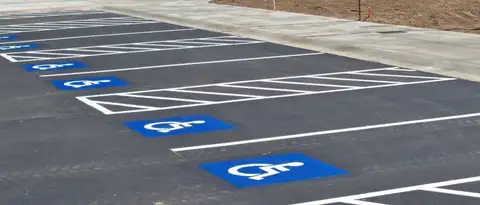
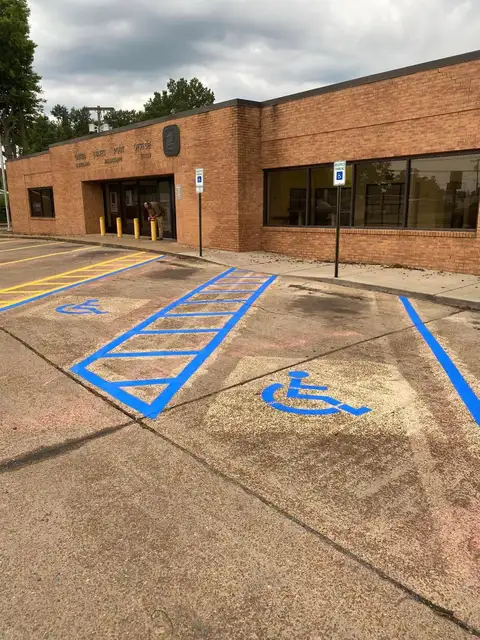
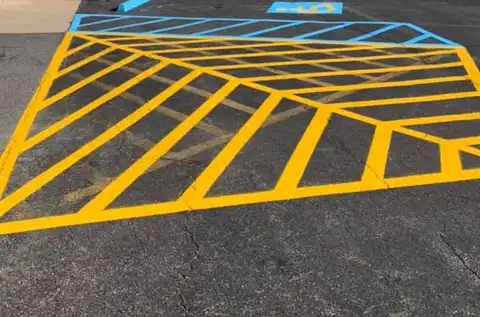
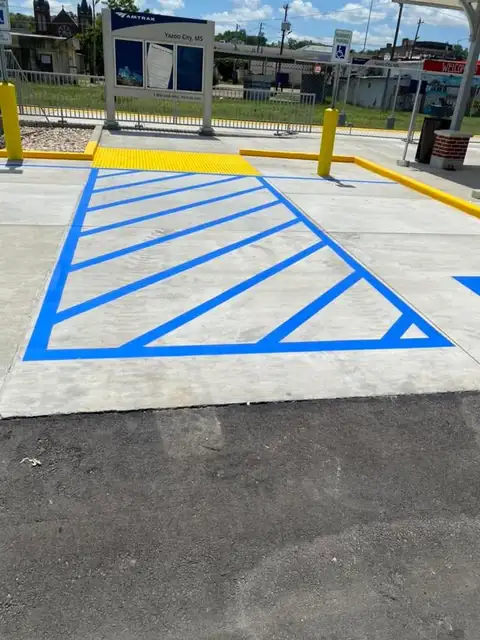
Accessible parking follows the 2010 ADA Standards. Accessible stalls and their access aisles cannot slope more than 1:48 in any direction, which can rule out spots on a hilly lot. Each stall needs a marked aisle at least 60 inches wide, and at least one in six must be van accessible. We find the right spot, paint the symbol and stripe the aisle.