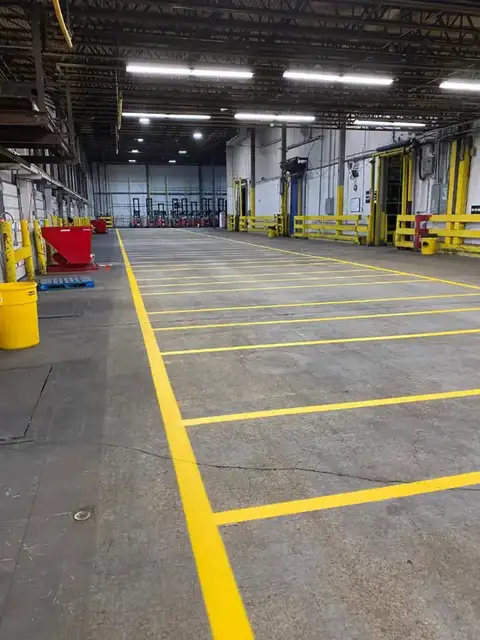
OSHA requires permanent aisles to be marked, but it does not hand you a floor color chart. Most color schemes you see in warehouses and distribution centers are conventions, not law. This guide separates the two: what the federal rules actually say about aisles and markings, and the color habits many facilities follow so forklift drivers and people on foot read the floor the same way.
What OSHA actually requires
The key rule is 29 CFR 1910.176(a). Where mechanical handling equipment is used, sufficient safe clearances shall be allowed for aisles, at loading docks, through doorways and wherever turns or passage must be made. Aisles and passageways must be kept clear and in good repair, with no obstruction that could create a hazard. And permanent aisles and passageways shall be appropriately marked. Section 1910.176(e) adds that clearance signs shall be provided to warn of clearance limits.
The walking-working surfaces rule, 1910.22, requires floors to be kept clean, orderly and sanitary, free of hazards, and inspected regularly and as necessary and maintained in safe condition. It does not set marking colors. Worn-off aisle lines are a maintenance item like any other, and they belong on the same inspection list as damaged dock plates and floor cracks. If a forklift driver cannot see where the aisle ends, the marking is not doing its job.
What OSHA has said about aisle lines
OSHA's letters on this topic are old and now archived, with a notice that they may no longer represent OSHA policy, but they are still the clearest federal guidance. A 1972 letter said aisle lines may be any color so long as they clearly define the aisle, and may be dots, squares, strips or continuous lines. It said recommended widths run from 2 to 6 inches, so any width of 2 inches or more is acceptable.
The same letter recommended aisles at least 3 feet wider than the largest equipment used, or a minimum of 4 feet. An archived OSHA directive called painted lines the most feasible method where practical, and said pillar marking, flags, cones and similar methods are acceptable if worker training covers how to recognize them.
OSHA's safety color code
Section 1910.144 does set colors, but for hazards, not floor layouts. Red is the basic color for danger and stop: flammable liquid safety cans, danger signs, and emergency stop bars and buttons on hazardous machines. Yellow is the basic color for caution and for marking physical hazards like tripping, falling and caught-in-between hazards.
Many floor color schemes borrow from this, which is why yellow shows up so often on aisle lines and platform edges. ANSI Z535.1 gets cited too, but according to one marking-supply guide, the color specs were taken out of that standard's 2002 edition, and the standard says its specs are meant for safety signs, not floor marking.
A common color convention (not law)
One scheme published by a safety products maker, and repeated in a plant maintenance trade magazine, runs like this. Yellow for aisles, traffic lanes and work cells. White for equipment and fixtures. Blue, green or black for materials, including raw stock, work in progress and finished goods. Orange for material held for inspection. Red for defects, scrap, rework and red tag areas.
Striped lines in the same scheme: red and white for areas kept clear for safety or compliance, such as in front of electrical panels and fire equipment. Black and white for areas kept clear for operations. Black and yellow for spots where workers face special physical or health hazards. Both sources say there is no government mandated or widely accepted industry standard for floor colors. Treat this as a starting point.
Pick a system and write it down
Because there is no mandated color chart, consistency is what makes marking work. Pick one scheme for the whole building, put it on a floor map, and post it where people can see it. Use the same color for the same meaning in every aisle and every shift. OSHA's archived guidance ties marking to training, so new hires and temp workers should learn the colors on day one. When you add racking or move a dock, update the map and the floor together.
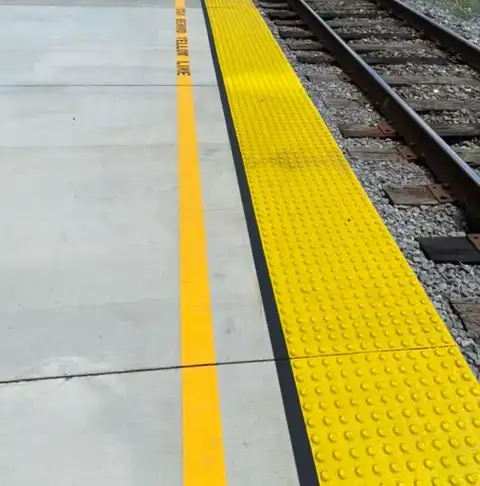
Safety lines on platforms and walkways
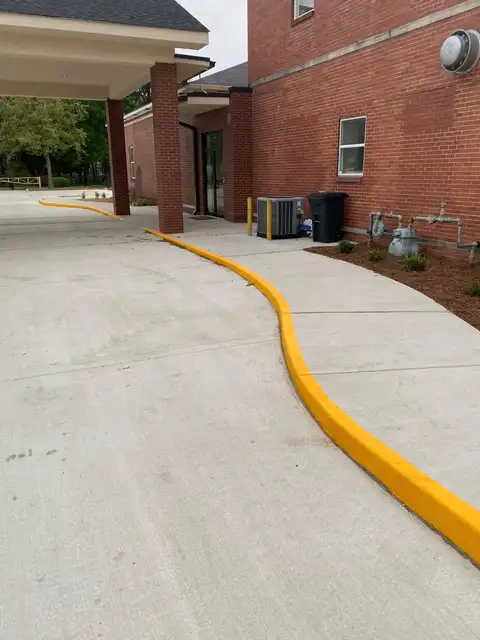
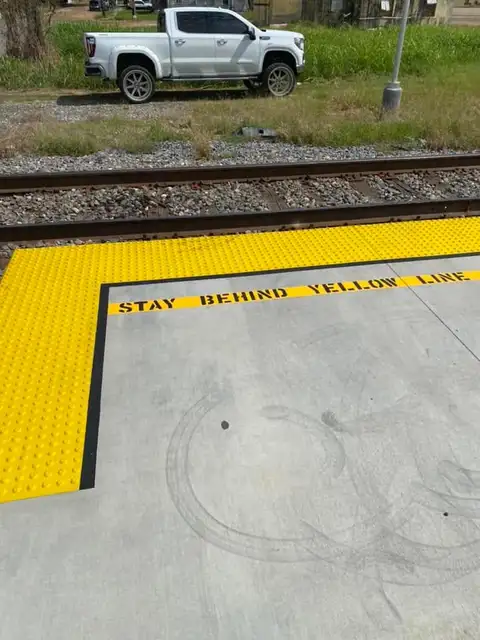
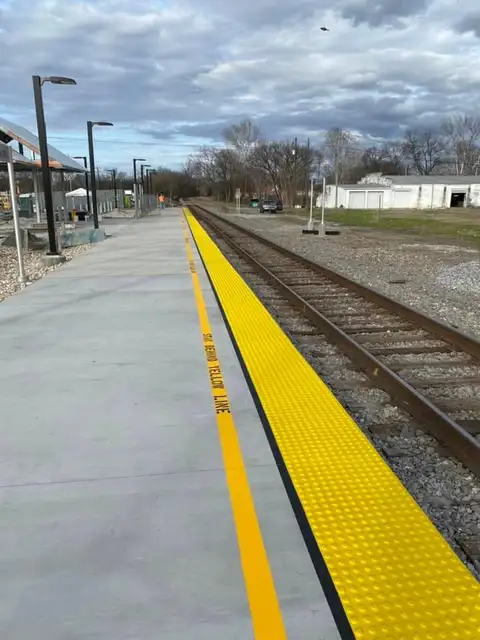
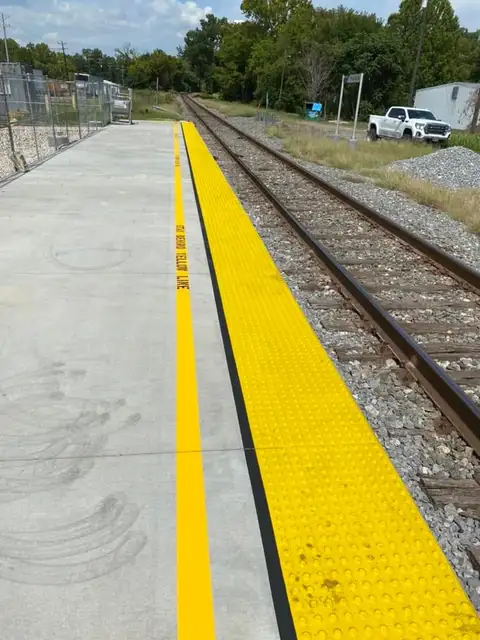
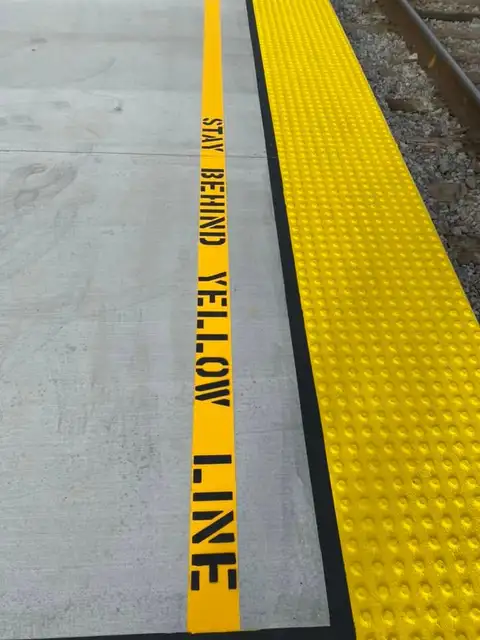
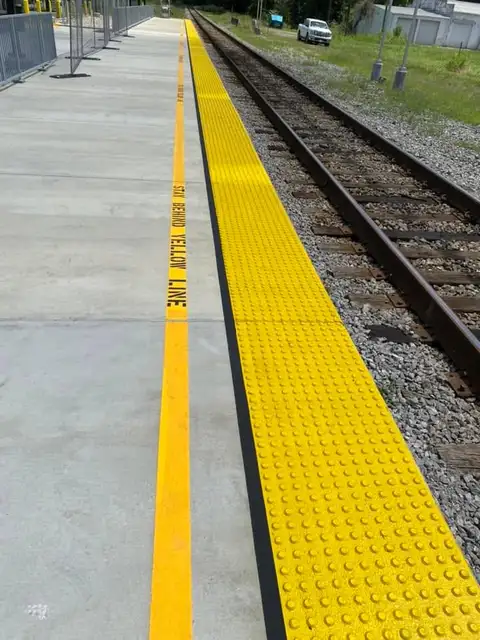
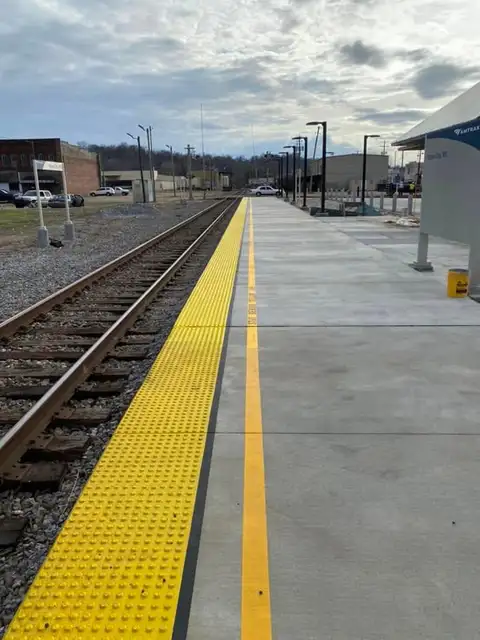
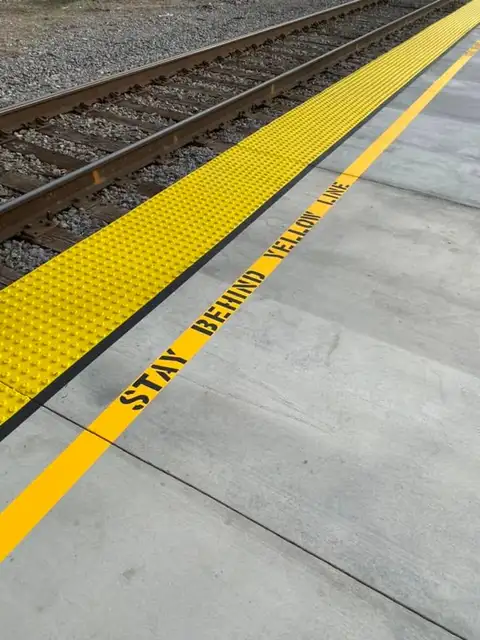
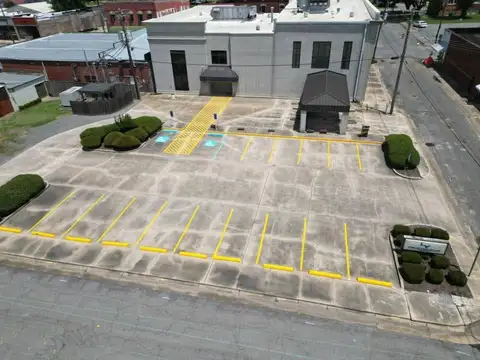
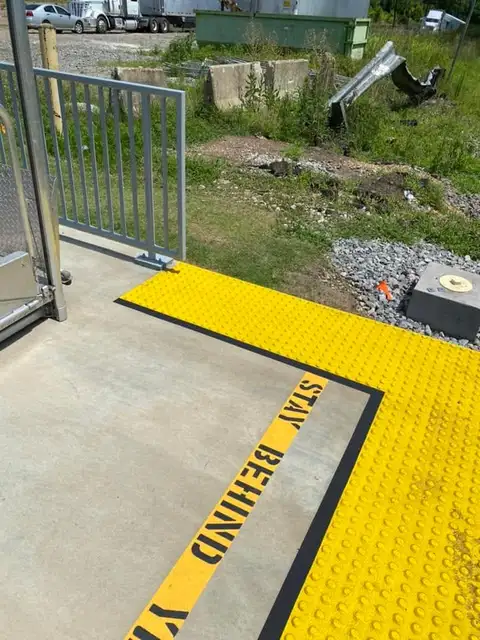
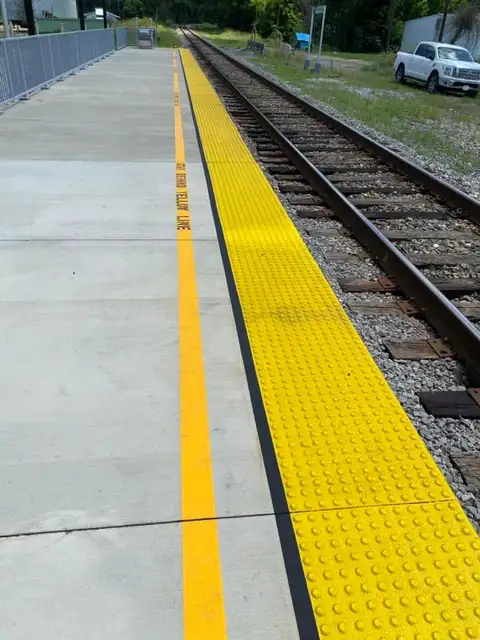
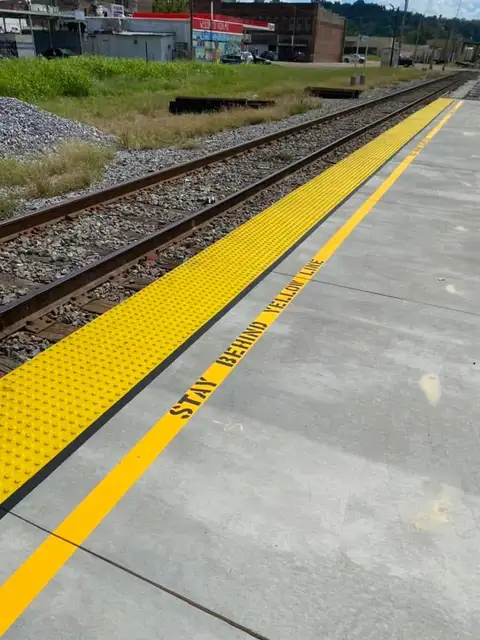
Yellow is OSHA's color for caution and physical hazards, so yellow lines along platform edges, loading docks and walkways fit the federal color code. These lines tell people where the edge is and where to stand. Straight Line Services paints safety lines like these, including yellow lines along platforms and walkways, as well as lane and bay lines on warehouse concrete.
Concrete prep and timing
Floor paint is only as good as the concrete under it. One county striping spec says not to paint concrete until it has cured for 28 days. A Texas DOT research synthesis notes that surface prep is more complicated on concrete and that prep of concrete is vital to marking performance. Floors need to be clean, free of oil and dust, and dry. Follow the coating manufacturer's directions for prep, temperature and return to traffic.
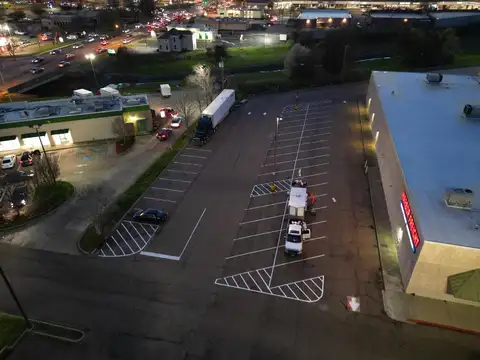
Straight Line Services stripes warehouse floors in Mississippi, Louisiana, Tennessee, Alabama and Arkansas, with lane and bay lines on concrete. Bring your layout, or we can talk through traffic flow, dock areas and racking with you and help you sort one out. Call or text 662-719-7737 for a free estimate.
Need this done? Straight Line Services gives free estimates from Ruleville. Call or text 662-719-7737.
Free estimate