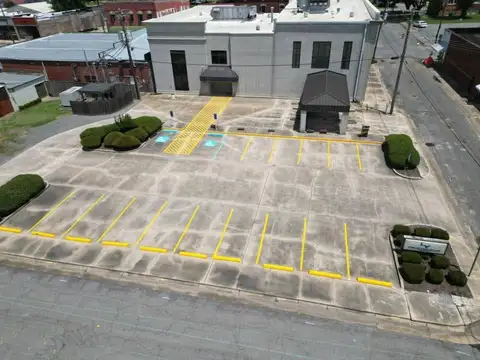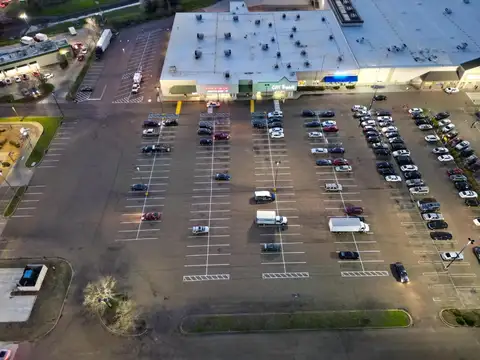
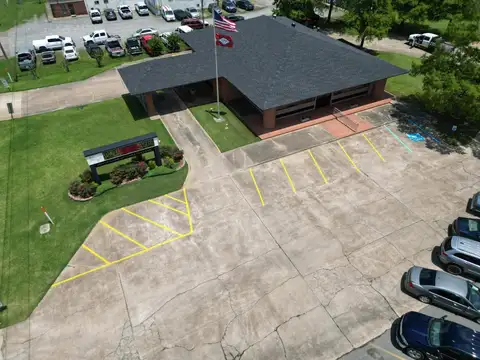


The kinds of lots we see in Memphis
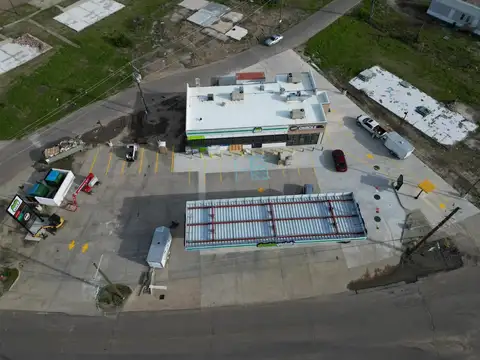
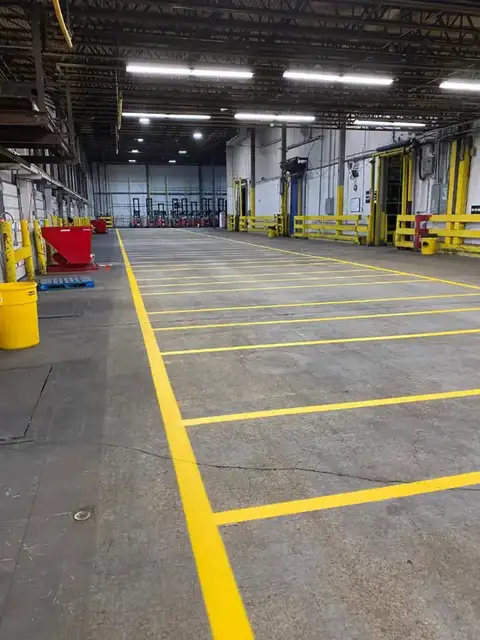
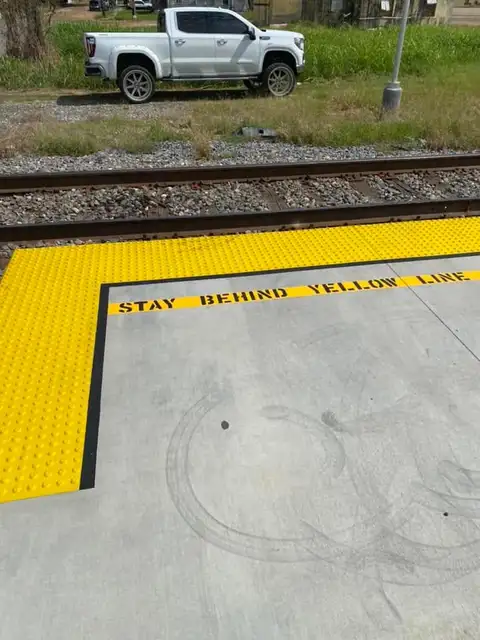
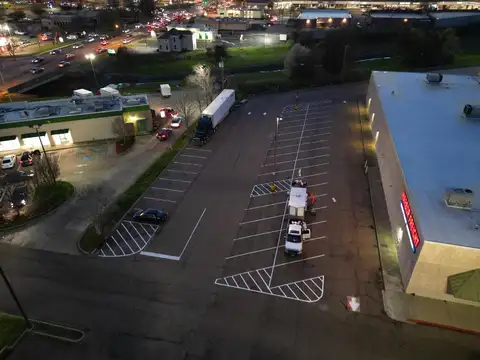
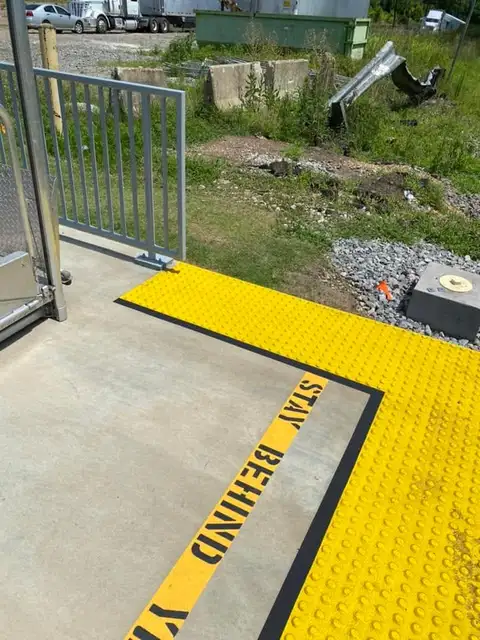
Memphis has a little of everything. Distribution and warehouse sites near the airport and along the interstates need truck lanes, dock areas and employee parking laid out so trucks and cars stay apart. Inside, those same buildings need lane and bay lines on the concrete and yellow safety lines along walkways. The medical district around St. Jude, Regional One and Methodist University Hospital has garages and surface lots that take heavy daily traffic and a lot of accessible parking.
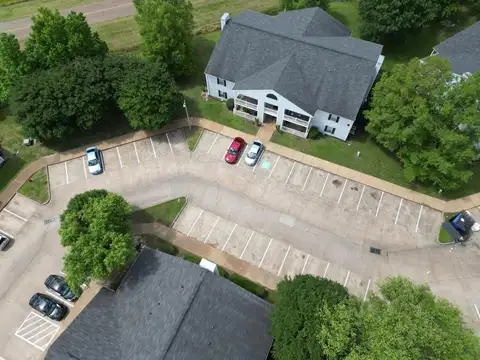
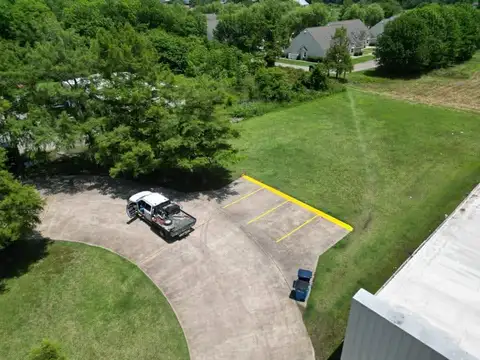
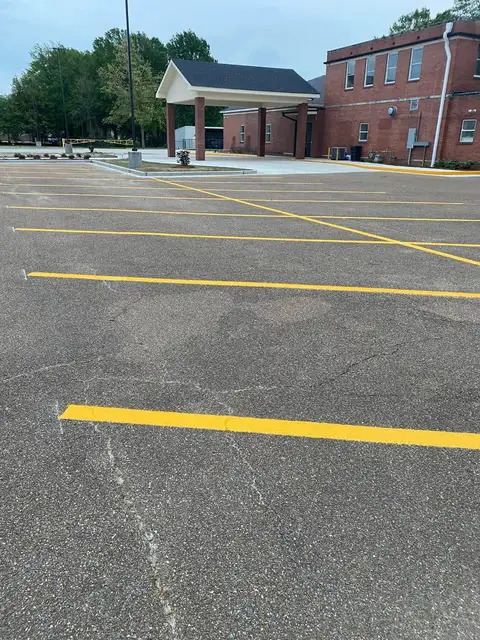
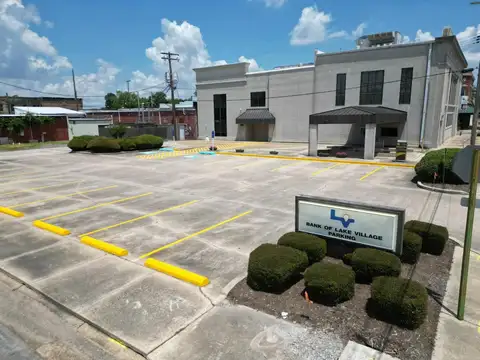
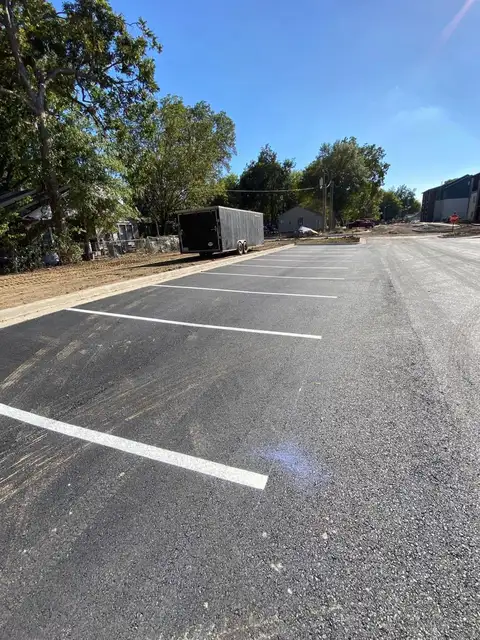
Then there are the everyday lots: strip centers, grocery stores, churches, schools, apartment complexes and office parks from Midtown out to Cordova and Whitehaven. Most of these were striped once when they were paved and then sealed or patched over the years. When the old layout no longer fits how people use the lot, we can lay out a new traffic plan, move stalls, add arrows and stop bars, and stripe it fresh.
Memphis heat, rain and faded paint
Memphis summers are long and hot, and the sun beats on asphalt from late spring into fall. That bakes the paint and fades it, and tire traffic wears it down fastest at entrances, turns and drive lanes. Hard spring storms and heavy rain wash grit across the lot and grind lines down even more. A lot that looked sharp a couple of years ago can turn gray and hard to read without anyone noticing.
Timing matters. Paint needs dry pavement and a window without rain to set, so we watch the weather and plan around it. On sealed lots we wait until the sealer is ready for paint. If there are potholes, broken edges or cracked concrete where lines need to go, we can handle minor concrete and asphalt repair first so the new lines have a solid surface to sit on.
ADA stalls and fire lanes in Memphis
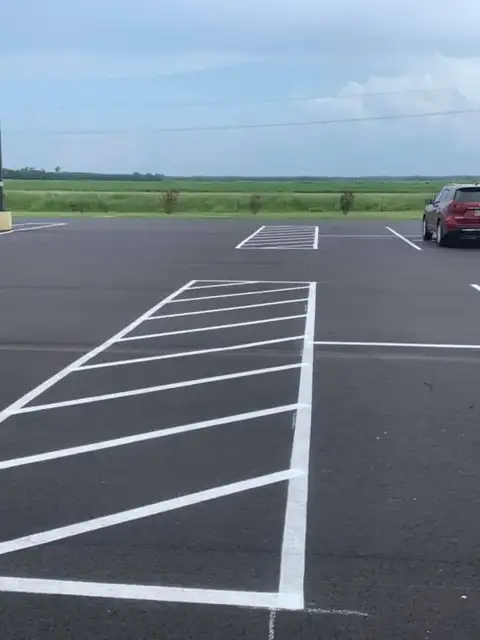
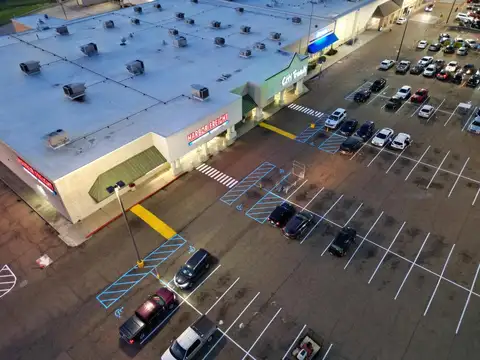
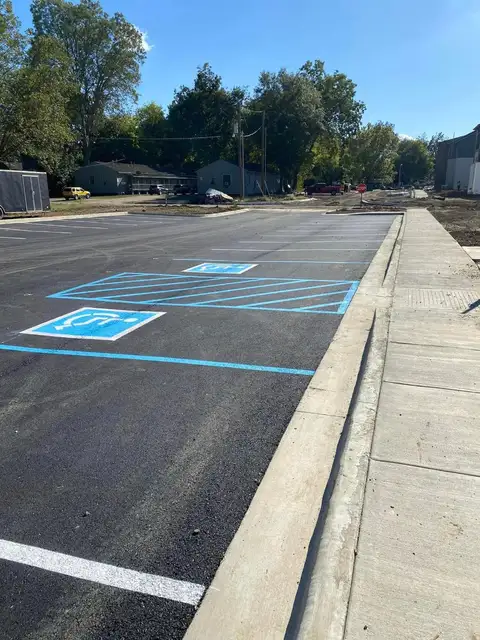
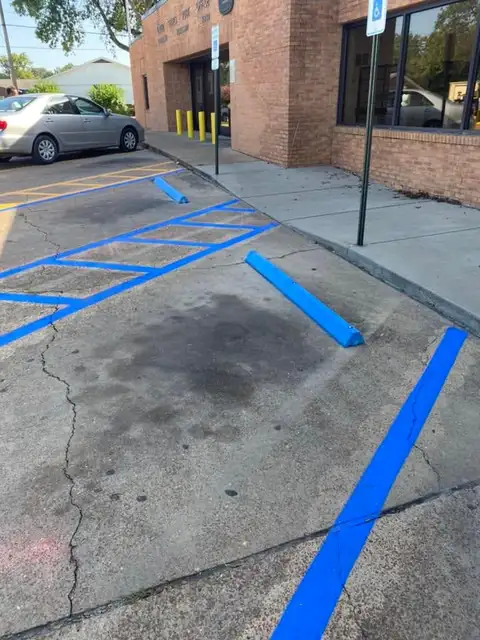
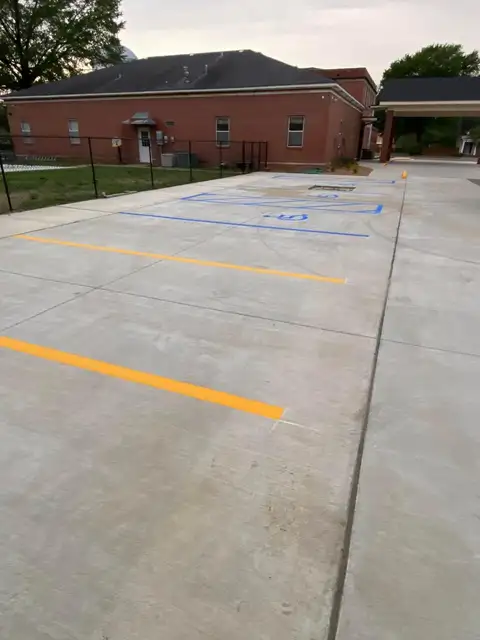
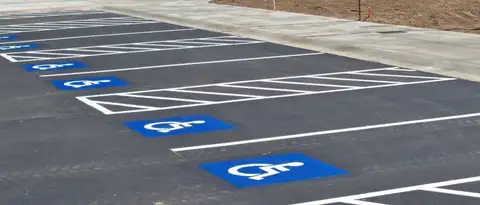
Accessible parking follows the federal 2010 ADA Standards. Each accessible stall needs an access aisle at least 60 inches wide, marked so people do not park in it. At least one of every six accessible stalls must be van accessible, which means a wider stall or a wider aisle. Signs go at least 60 inches high to the bottom of the sign. We lay out the stalls, paint the symbol and stripe the aisle so it reads clearly.
Fire lanes in Memphis are a city matter. The City of Memphis adopts its own edition of the International Fire Code by ordinance, and its fire code official and the Fire Prevention Bureau decide what fire lane marking a site needs. The rest of Tennessee works from the state fire marshal's adopted code. Under the IFC, fire apparatus access roads generally must be at least 20 feet wide and kept clear. Check with the Memphis Fire Prevention Bureau on your site's exact requirements.